Hormuz and the Looming Economic Catastrophe
The Trump administration is missing the bigger picture.
In the classic martial arts film Enter the Dragon, Bruce Lee’s character is instructing a young, aspiring fighter. Irritated at the lack of progress his student is making, he points to the sky. “It’s like a finger pointing away to the moon,” he says as the student tries to focus on what his teacher is saying. “Don’t concentrate on the finger,” Lee says, slapping him on the head, “or you will miss all that heavenly glory.” The quote is derived from an old Buddhist text called the Śūraṅgama Sūtra, and the point is clear: Sometimes if you focus on what is immediately in front of you, you can miss the point entirely.
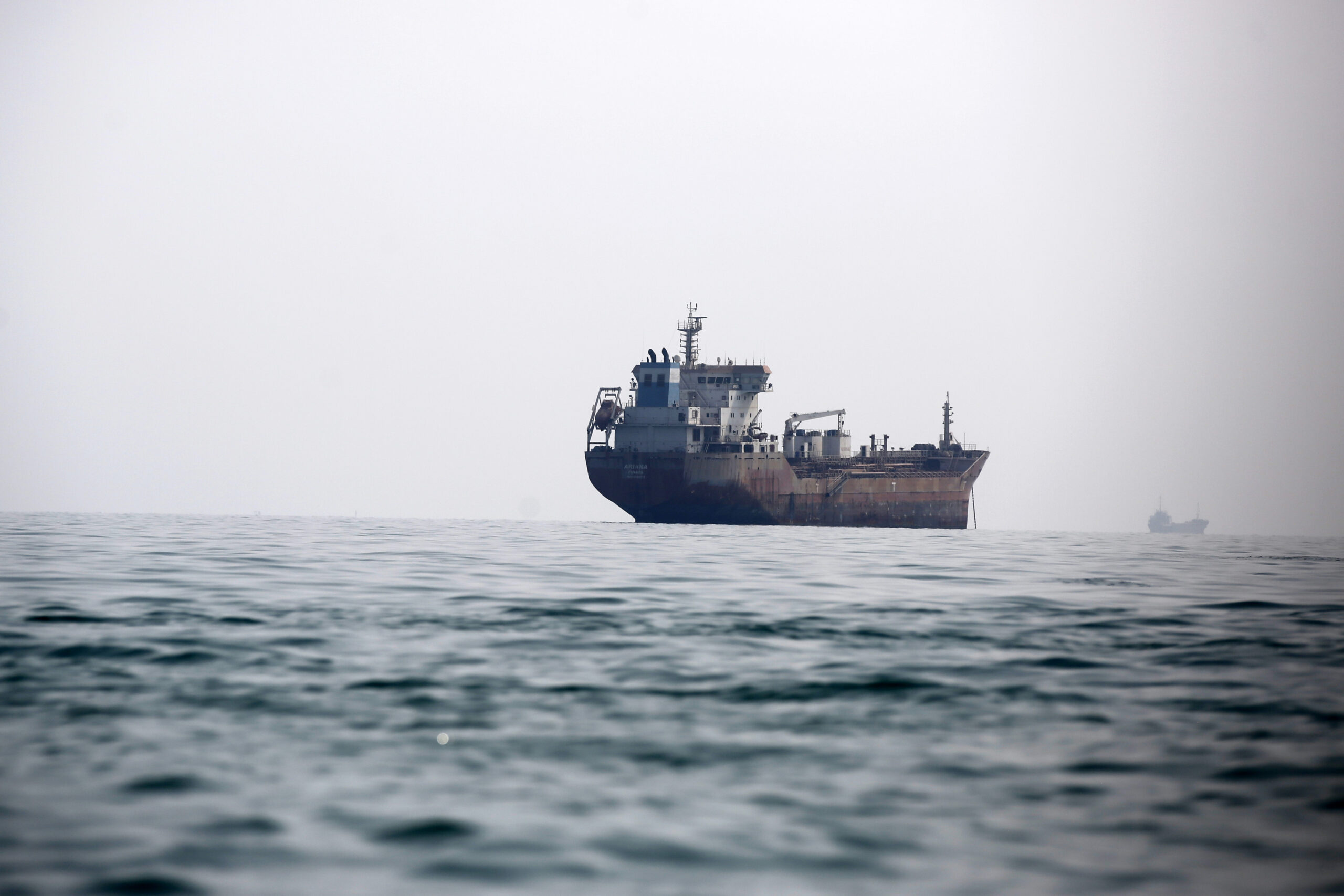
Something like this is happening in Washington, DC, right now. For almost two weeks, the debate around the progress or lack thereof in the Iran War has been focused on activity in the Strait of Hormuz. A whole host of maritime experts have emerged suddenly to inform us that the Trump administration has succeeded in reopening the crucial waterway to shipping. Maximalists are claiming that this means the United States has effectively won the war in the Middle East. Others are making the more modest claim that this reopening of the Strait will solve the looming energy crisis.
These were the two perspectives that most people who were not deeply involved in the debate heard. There was, however, a small but vocal minority who questioned whether the Strait had been opened at all. If Iran had effective fire control over the Strait in spring and summer, they asked, then why would they suddenly lose it now? Almost immediately after this question was raised, Iran settled the debate by striking an enormous number of ships: 12 and counting in less than a week.
To those of us who were paying attention, the whole exercise felt like looking at Lee’s finger as he points to the moon. As these debates unfolded, the market for U.S. Treasury debt continued an epic sell-off. Bloomberg quoted an investment banker who stated that Treasuries were “trading like a meme stock.” U.S. Treasury bonds have now experienced their worst long-run returns in history.
Treasury bonds are not just any old asset. For one, they are the debt of the U.S. government. If they become uninvestable, the capacity for Washington to live beyond its means through debt issuance is open to question. Treasuries are also the benchmark asset for the entire global dollar system that has allowed the U.S. to run enormous deficits for decades. If this asset starts “trading like a meme stock” and generating awful returns, foreigners will opt for something else. This week, the president of the German central bank stated that “the case for further diversification into gold remains significant.” People are talking.
In mid-September, the speaker of the Iranian parliament, Mohammed Bagher Ghalibaf, posted an equation on X. Unusually for an obscure piece of algebra, the post garnered nearly 7 million views. The equation was a modified version of what economists call the “Taylor Rule,” a method that economists and central bankers use when setting central bank interest rates. In normal times, the equation factors in expected future inflation and how much slack is in the economy. But Ghalibaf’s equation—which he called the “Straits Taylor Rule” —included two new variables: the Strait of Hormuz and the Bab el-Mandeb, the two waterways currently under fire from Iran and the Houthis in Yemen, respectively.
The equation is a stripped-down representation of Iran’s strategy. By controlling these waterways, Iran and its allied groups have gained control over the global energy market. By squeezing these chokepoints, Iran can assert de facto control over America’s financial markets by pushing up expected inflation. Central banks like the Federal Reserve realize that this is no mere bluff and have already started raising interest rates. Ghalibaf’s equation explains, to a very large extent, why American government debt is currently trading like a meme stock.
Meanwhile, at the same time as these pressures are felt in American financial markets, the real economy is undergoing a squeeze too. Recent reports from the Energy Information Agency suggest that American heating-oil bills are expected to rise by 21 percent this winter. Diesel markets are entering into a genuine crisis, with President Donald Trump floating the prospect of banning diesel exports to ensure that there are no shortages. Diesel is the lifeblood of the American logistics chain. If there are shortages, trains and trucks will not run and goods will not be delivered to shelves. Trump has walked back the diesel export ban for now, after strong-arming the Europeans to dump their oil and diesel reserves, but there is every chance that this option appears back on the table as the crisis worsens. Food prices are rising too, with sugar prices looking particularly worrisome.
Subscribe Today
Get daily emails in your inbox
Once again, Ghalibaf outlined how this is part of Iran’s overall strategy. In an X post this week, the speaker published a rudimentary graph—coupled with a haunting image of a ghost—showing rising commodity prices and interest rates on one side, and falling consumer confidence, foreign interest in U.S. Treasuries, hyperscaler investment, and housing affordability on the other. The Iranians are not just trying to squeeze the American financial system—they are aiming to put extreme stress on the entire economy—and it looks increasingly like they intend on making this pressure felt before American voters go to the polls on November 3.
The Trump administration has become fixated on the Strait of Hormuz, seeing it as a decisive battlefield on which the U.S. can win the war. But the Strait is merely a means to an end. For Iran, that end is to slowly demolish the American economy and financial system until the pressure becomes too much and the U.S. backs off. The idea that you can “win” such a battle is delusional.
The Strait is merely the finger in Lee’s analogy. It is Iran’s overall economic strategy—the moon—that we should focus on. And when we do, we come to the worrying conclusion that by the time the Trump administration cries uncle, the damage done to the American economy and financial system will be so severe that it could take many, many years to recover.