A NATO Defense Bank Can’t Solve Allies’ Fundamental Fiscal Problems
Western leaders have found a new way to avoid making difficult choices.
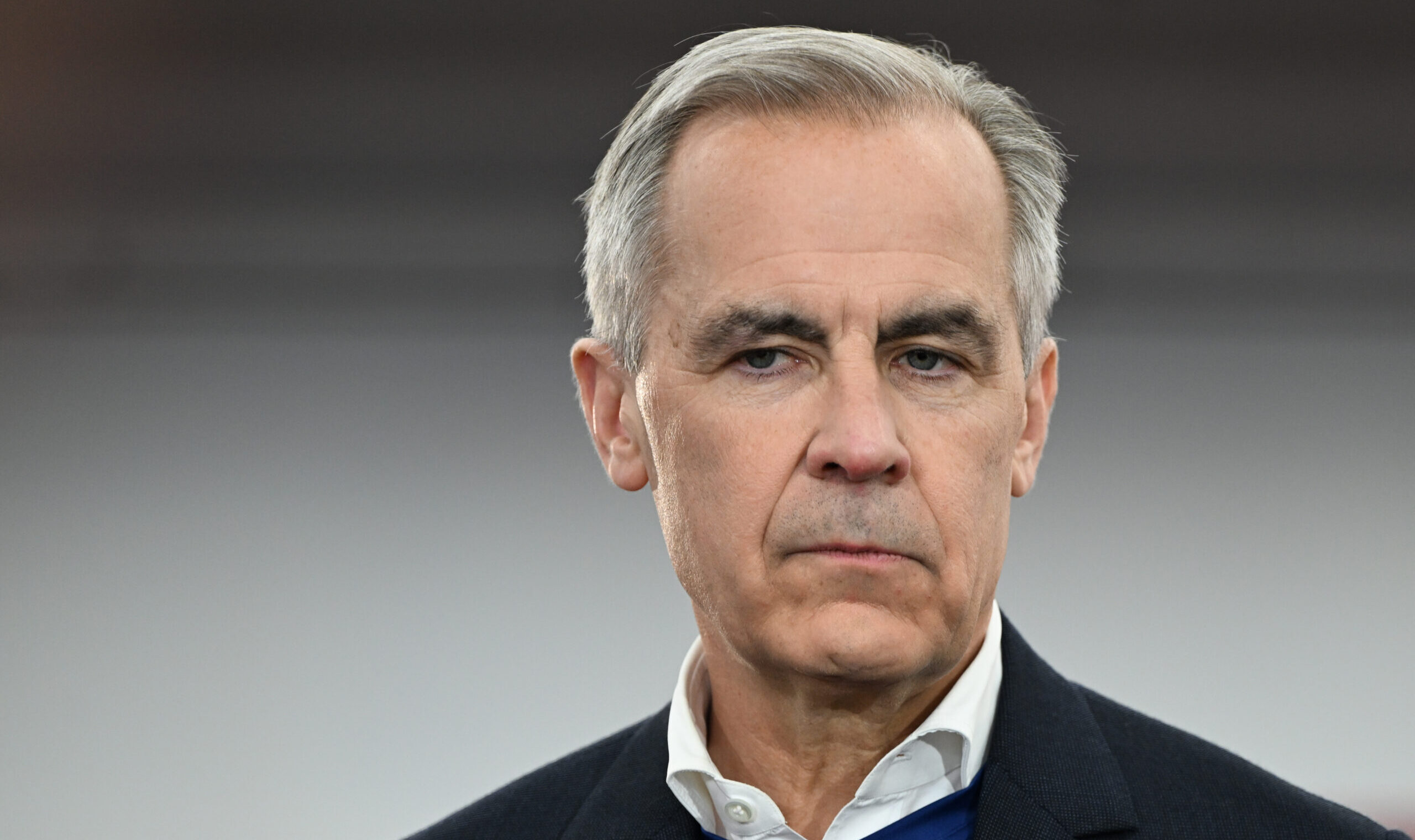
Led by Canada’s Prime Minister Mark Carney, there is a growing push for a NATO bank that would enable greater military expenditures. Recent reporting suggests that the British government, which had dismissed the idea a few months earlier, is seriously reconsidering the idea. Should such a bank be established, however, it would worsen national debt burdens while functioning as a giveaway to weapons manufacturers and financial institutions.
Increased defense spending is presented as an unavoidable imperative that should not undermine other expenditures. In a piece published in the Financial Times in June of this year, Carney and his Luxembourgish counterpart Luc Frieden argued that “a new NATO bank” is necessary since pledges to increase defense budgets “will require more than €850bn in additional annual spending across the alliance in Europe and Canada, which cannot come at the expense of other investment priorities at home.”
In reality, a new financial institution can’t allow military spending to somehow not “come at the expense” of other domestic priorities. At best, it would merely delay a necessary reckoning between competing priorities.
A NATO defense bank would have three primary beneficiaries: political leaders who could present themselves as strong on defense; arms manufacturers whose profit margins would skyrocket; and financial institutions that would provide the credit and make a killing on the interest. Despite its branding as an international financial body that seeks to improve intergovernmental cooperation on defense, the NATO bank, at its core, would be merely a mechanism to mobilize capital from private banks. In effect, some of the world’s biggest financial institutions would be able to lend money to military contractors and national governments while debts could nominally be kept off national ledgers. But such rearrangements would not address the underlying fiscal implications.
The proposed Defense, Security and Resilience Bank (DSRB) would, nonetheless, increase overall national debt burdens. If growing military budgets are indispensable, itself a debatable claim, then governments should raise taxes to pay for them. The problem is that electorates have contradictory demands, wanting more spending on the armed forces and public services while at the same time desiring reduced tax burdens.
Though ostensibly modelled on the World Bank and the European Bank for Reconstruction and Development, the DSRB probably wouldn’t bring the same economic benefits. Military spending is one of the least effective forms of government expenditure when it comes to employment. Research shows that the direct and indirect employment impact of military spending in the United States— which has the world’s largest and most complex military-industrial ecosystem—is lower than for renewable energy, healthcare, and education. Military hardware, often packed in warehouses and offering dubious combat effectiveness, does not have the same economic multiplier effect as investing in frontier, civilian-oriented technologies.
Some may point to Russia as a successful example of military-driven economic growth. Despite Western sanctions, its GDP has grown fairly significantly since February 2022, when Moscow invaded Ukraine. Controlling for differences in local prices, Russia’s GDP has even overtaken Japan’s and Germany’s. But the Kremlin has been far more fiscally prudent than its Western counterparts, relying on increased taxation to fund its military operations. As a result, Russia’s debt as a share of GDP has remained around 20 percent, significantly lower than in the U.S., Britain, Canada, and France—all of which have public debt burdens above 100 percent.
Moreover, the rush to fill arsenals to meet arbitrary spending targets risks extreme financial waste. In the initial years of the Russia–Ukraine conflict, Moscow, Kiev, and Western capitals focused on boosting artillery production and armoured vehicles only to later learn that cheap drones would play a star role in the combat. If billions of dollars worth of new military materiel can be rendered outmoded in just two to three years, greater caution is warranted before borrowing even more money to build up militaries.
Subscribe Today
Get daily emails in your inbox
A defense bank is just one example of the misguided pursuit of militarization to resolve fundamental challenges. Amid reduced industrial competitiveness and fears of lagging behind, Western governments have increasingly been hoping that weapons manufacturing can revive economies. In Britain, the defense industry has been identified as a pillar of the country’s economic growth strategy. Meanwhile, the famous German company Volkswagen recently announced that one of its plants will be converted to manufacture Israeli air defense equipment. Many argue that “arms makers will be at the heart of Ukraine’s economic reconstruction.”
All of this planned spending represents an enormous opportunity cost. An overemphasis on military expenditure risks underinvesting in other parts of society while distorting economic and political incentives. This summer’s devastating heatwaves, resulting in droughts in Britain, thousands of deaths across Europe, and nearly a quarter of million evacuations in France and Spain alone due to wildfires, exemplify the real and present dangers that can be neglected because of a narrowing focus on military spending. Food security, transport infrastructure, and pandemic prevention are all priorities that ought to be central to discussions about national defense.
Political leaders are loath to make difficult decisions. But if they are sincere in their belief that increased military spending is vital for national defense, then they should be prepared to shoulder the potential political cost of raising revenue through taxes and not debt. As long as national leaders focus on borrowing more money to buy expensive weapons with dubious utility to present themselves as tough, they are declining to do the difficult work of governance on which the long-term health of their societies actually depend.