‘Regime Change’ at the Federal Reserve?
The new Fed chair is likely to be swallowed by the structural factors of central bank dysfunction.
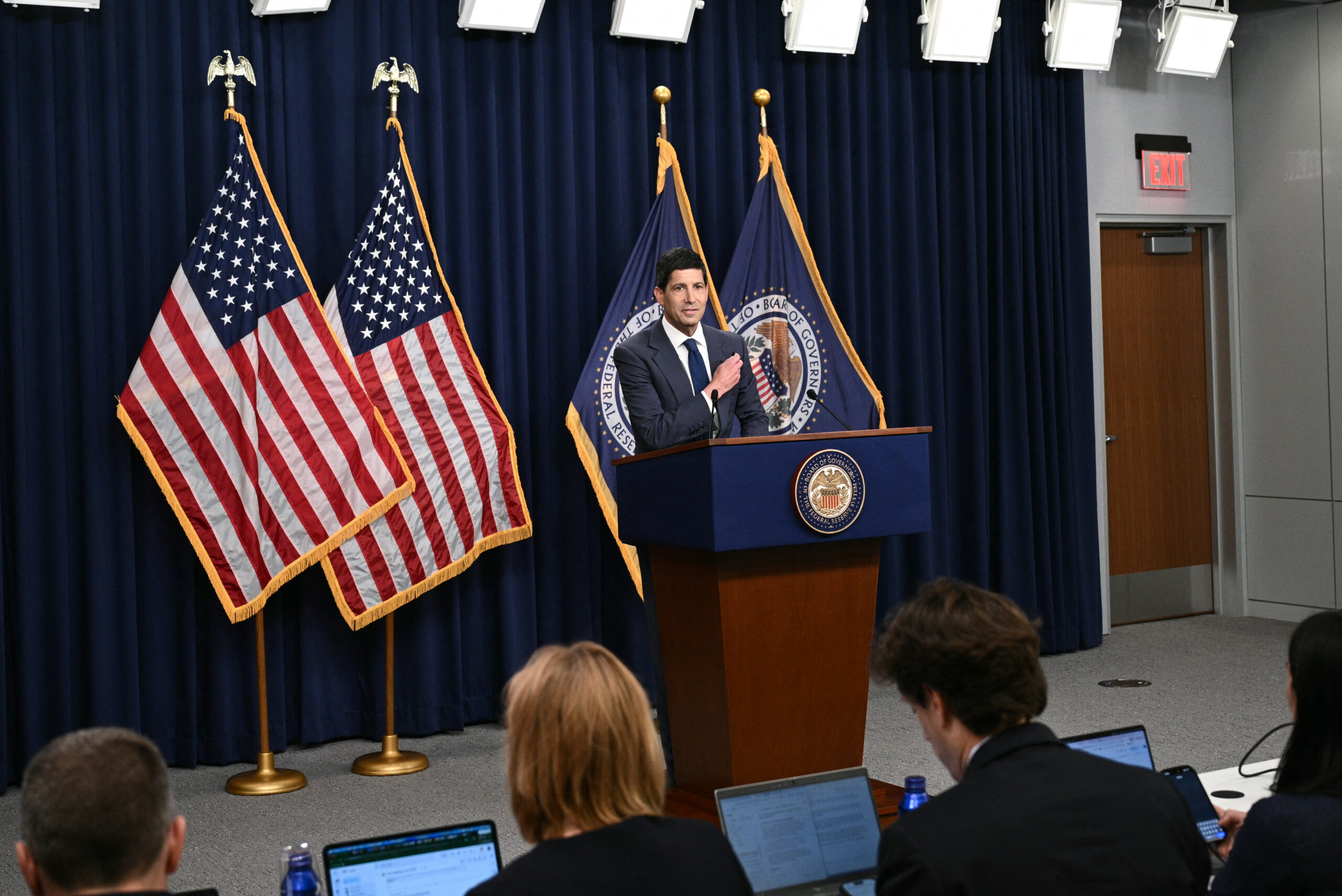
Kevin Warsh became the 17th chair of the Federal Reserve in May and was immediately handed responsibility for fixing a rising inflation rate, a tarnished institutional reputation, and an ever-growing balance sheet. Nevertheless, Warsh appears optimistic, observing at his first press conference that “the recent past need not be prologue.”
“At any institution, a change in leadership is a natural and timely opportunity to reaffirm its mission, to review current practices, and to consider whether those practices best meet our objectives,” he said.
While not so bombastic as Pete Hegseth’s rhetoric of “ending [of the] war on warriors” over at the War Department, Warsh is signaling a similarly ambitious reform effort at the nation’s central bank.
He outlined a plan to launch five task forces to investigate key areas of the Fed’s operations and reiterated, as Federal Reserve chairs have since time began, that “this Committee will deliver price stability.”
Warsh has certainly earned his stripes as an inflation hawk, a reputation that has prompted much discussion about whether he will lower interest rates (as the president wants) or hike them to fight inflation. And it’s worth noting that his critiques of the central bank have been far more institutional in the past. Warsh has advocated for bringing down the balance sheet, the expansion of which he dubbed “mission creep” for fiscal policy. During the heyday of quantitative easing, he criticized the Fed’s pumping of trillions of dollars into the economy all at once.
Warsh seems to want real changes. But the very nature of the machine he now operates makes it unlikely that he will escape business as usual.
Perhaps the greatest specter hanging over the Federal Reserve is its relationship with the White House. Between the recent outcome of Trump v. Cook, in which the Supreme Court affirmed the Federal Reserve’s historic and unique freedom from executive branch interference, and the president’s seeming desire to dictate policy to the Fed (not to mention his investigations of former Chair Jerome Powell), the issue of central bank independence has become increasingly fraught.
Warsh, as both a nominee and chair, has reiterated his commitment to central bank independence, while also offering caveats that could satisfy his boss. During his confirmation hearing before the Senate Banking Committee, for example, he said that while the Fed’s “monetary policy independence is essential,” this independence is “earned” by meeting clear objectives.
Worries about Warsh deferring overmuch to the White House, however, may be misplaced. Nothing in law specifically mandates “Federal Reserve independence.” In its modern incarnation, this prerogative in fact began in 1951 with the Treasury-Fed Accord, an agreement between the Treasury Department and the Fed Chair to end the coordination of interest rate decisions.
But this nonbinding agreement didn’t stop presidents from trying to influence the decisionmaking of the Federal Reserve. “Kennedy enjoyed ‘fine cooperation’ with the Fed and proposed making the Fed chair an effective member of the president’s cabinet––a move [then–Fed chair] Martin supported!” Jonathan Newman, the Henry Hazlitt Research Fellow at the Mises Institute, told The American Conservative. “There are accounts of a physical altercation between LBJ and Martin... because LBJ wanted more accommodative monetary policy to finance the Vietnam War and Great Society.”
Nor was it a one-way street. Newman points out that Martin was reappointed by John F. Kennedy because he was seen as accommodating to the economic policies of the administration. Kennedy would note in announcing Martin’s renomination that “it is essential that there exist a relationship of mutual confidence and cooperation between the Federal Reserve, the economic agencies of the Administration, including especially the Secretary of the Treasury, and the President.”
Alexander Salter, a professor of economics at Texas Tech University also points out that the Federal Reserve, established by the Federal Reserve Act of 1913, is by statute subject to political control. The Fed is accountable to Congress, which has amended the act hundreds of times, tasks it with its mandates, and confirms or rejects appointees to the Board of Governors.
The court’s ruling in Trump v. Cook seems to offer a special shield for these governors from dismissal from the executive. But Salter notes that the more the Federal Reserve
allocates credit and wanders into fiscal policy, the less that shielding makes sense. When the Supreme Court recently expanded presidential control over federal personnel, it carved out the Fed by pointing to history and to the Fed's odd quasi-private structure. This is, frankly, an exception in search of a principle
So, whatever the dynamic between Warsh and Trump, it is likely to fall in the range of normal relationships between the Fed Chair and the executive. But could more radical changes come from Warsh’s reform agenda itself?
Warsh promised that his task forces would spearhead reform at the central bank across five key areas: communications, which he already changed by ending forward guidance; the balance sheet, the expansion of which he has long opposed; data sources, an interesting addition; productivity and jobs, which clearly has in mind the implications of artificial intelligence; and inflation frameworks, which one can imagine will have a monetarist spin.
All of this is meant to address the core problems at the Federal Reserve, especially its failure to tame inflation and the drift from its statutory mission toward pursuits like climate advocacy, DEI, and fiscal dominance. It appears that Warsh wants to have a conversation like that which should have occurred in the realm of foreign policy at the end of the Cold War: “Can we be a normal central bank again?”
Is a “normal central bank” even starkly different from the behaviors it has undertaken in the previous two decades? We might rightly ask if the purpose of a system––in this case the Fed––is what it actually does. And what the Fed has done is fail to meet its legal mandates.
Most today are certainly aware of the Fed’s failure to contain inflation beginning in 2021. The central bank dismissed this inflation as “transitory” until Jerome Powell advanced through key stages of his renomination hearings, at which point it began to tackle the problem of rising prices––making Jerome Powell an interesting choice as the white knight for central bank independence.
Failing to meet the objectives it has been tasked with by law appears to be a consistent trend. “Congress told the Fed to deliver stable prices. From 1790 to 1913 [the year the Fed was established] the dollar held its value pretty well,” Salter explained to TAC. “A basket of goods costing $100 at the start of that period ran about $108 at the end of it. By 2008 the same basket cost roughly $2,400. The deeper problem is that the Fed decided for itself that ‘stable prices’ means two percent inflation forever.”
But the Fed has stumbled into new mission areas while failing to tackle inflation. Most are familiar with its dalliance, alongside much of corporate America, in DEI and climate policy, but more consistent has been the ventures into fiscal policy.
The Fed’s mechanism of choice has long been the purchase and reselling of Treasury bonds and bills, buying from banks of choice––the so-called “primary dealers”––and injecting reserves into the market. But its balance sheet has grown dramatically in recent years, accelerating in the wake of the financial crisis.
When the Fed buys trillions of dollars of Treasuries (as it has since 2009), this puts downward pressure on treasury interest rates. This, in turn, eases borrowing costs for the federal government, making it far easier for Washington to borrow rather than directly tax to finance its spendings. Such easing pumps new money into the banking system and puts upward pressure on prices. When the Fed raises interest rates once more to combat this surging inflation, it makes it costlier for the federal government to borrow and thus taxes must be raised or debt refinanced. Debt is refinanced at higher rates, which increases the costs of borrowing until we reach the Congressional Budget Office’s projection that interest payments on the debt, alongside entitlement spending, will consume all government revenue by 2036.
If the Fed chooses to combat inflation rather than enable further spending, rates will come up and erode the balance sheets of banks who will have purchased government debt at artificially low rates. But the banking system, long an object of the Fed’s protection, may be undermined. Thus the central bank has an incentive to push down interest rates, print new money, and let price inflation run rampant so as to not undermine the banking system.
Warsh may want to buck the trend of balance sheet expansion, but any drastic or meaningful contraction will put pressures on the banking system that the Fed might be forced to address. It is unlikely, then, that there will be significant change in the Fed’s balance sheet policy. The drastic change needed to have an effect that isn’t immediately reversed by a less committed Fed chair or board would be far too drastic and politically unpopular to do.
Meanwhile, the task forces that Warsh has established are more likely to tinker around the margins than effect fundamental changes.
Task forces can be easily reversed under the next chair of the Federal Reserve (if they are even implemented further by the Board of Governors). Warsh, though he has the benefit of being the Fed’s spokesman following Federal Open Market Committee (FOMC) meetings, is just one vote on the committee.
Changes in data usages can easily be reversed. For much of the Fed’s history the board considered “M2,” as the most common measure of the money supply is called, as part of its decisionmaking. It was only under Alan Greenspan that the aggregate was deemphasized in favor of other data sources. If Warsh readopts this measure it could be discarded just as easily by his successor.
“What one chair does, another can undo,” Salter told TAC, “The best we can hope for without rules is that Warsh so alters the culture of the Fed in a positive way that future chairs find it in their self-interest to continue down Warsh’s path.”
Newman was far more pessimistic:
The Fed’s “data dependence” just gives it a technocratic veneer—it makes it look like a team of experts is carefully analyzing data to inform and guide effective and objective policy. In my view, monetary policy is by nature distortive and can never be “objective,” even if they cite data or some policy rule.
The chair’s choice to follow a policy rule does not bind the institution to any particular path in the future. In fact, the practical realities of fiscal policy create a fork in the road for future central bankers to choose between fighting inflationary pressures or allowing the erosion of the banking system it serves.
Subscribe Today
Get daily emails in your inbox
The only true solution would be to bind the central bank by law, amending the Federal Reserve Act to establish clearer objectives and specifically prohibit the sorts of actions that imperil the accomplishment of those objectives. This is unlikely to happen. Both political parties have every incentive to seize control of the central bank’s ability to act with “discretion” to enable their choice of policies.
Whether it be for warfare or welfare, funding government spending via taxation is incredibly unpopular. Because neither political party wants to raise taxes to pay for its policies, our leaders choose instead to pass the challenge of paying for the growing debt burden onto those that come after them. Thus, they will never bar the central bank from buying the government bonds––under the guise of inflation control and growth stimulus––that will enable them to borrow further.
Because our elected officials will not force Warsh’s hand, his efforts at reform will likely be limited to putting a bandaid over the bullethole of inflationism. Warsh may find in time that the institution and its bureaucratic structure will shape him more than he shapes it. Rather than heralding regime change, his chairmanship will see the continuation of business as usual.