Stop Sending Billions in U.S. Aid to Jordan
Israel isn’t the only Mideast country receiving vast sums of American tax dollars.
In April, Rep. Ro Khanna (D-CA) called for Washington to end assistance to Israel, insisting that the funds would be better spent on hospitals and childcare in America. On the other side of the aisle, Rep. Thomas Massie (R-KY) also opposed sending billions to Israel, citing the soaring U.S. deficit. Despite receiving minimal press coverage, many of the same arguments could also be made about the Israel’s eastern neighbor, Jordan, a country roughly the size of Indiana that has received massive amounts of U.S. aid.
The United States has provided Jordan with around $33.8 billion in assistance during the past 75 years. In 2022, the Biden Administration signed a memorandum of understanding with Jordan pledging $1.45 billion annually over seven years, the largest-ever MOU with the Hashemite Kingdom. This year, Congress authorized over $2 billion in aid to the country, placing it among the top three recipients of U.S. aid worldwide for 2026.
It might seem logical to some for Washington to send billions in aid to a nation facing a desperate financial crisis. But while Jordan indeed experiences an elevated unemployment rate, it is far from the world's poorest country. According to the World Bank, its GDP has quadrupled during the last two decades and is significantly higher than that of many African countries, including Burundi, Malawi, and Madagascar. “Jordan’s economy remains resilient, supported by sound macroeconomic policies,” asserted the International Monetary Fund in December. The life expectancy of Jordanians is around 78 years, ranking in the top third of countries, indicating relatively better healthcare services offered to citizens.
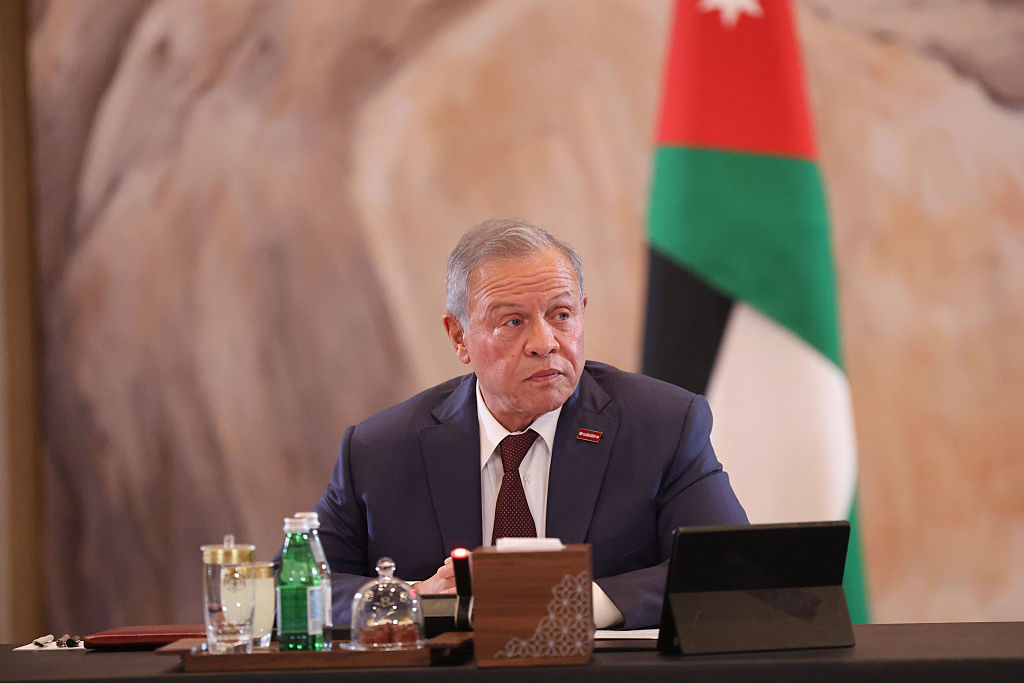
For progressives, it is important that Washington only send aid to countries that share its values. Unfortunately, Jordan does not meet this criterion. According to the Economist’s most recent rating of countries' levels of democracy, Jordan is labeled an “authoritarian regime,” the lowest ranking. In the 2024 parliamentary election, the Islamic Action Front—long considered the Muslim Brotherhood’s political wing—won the most seats. Yet, the following year, Jordanian authorities banned the Muslim Brotherhood and raided its headquarters. Reporters Without Borders ranked Jordan 142nd out of 180 countries worldwide in its 2026 press freedom ranking, lamenting widespread censorship. If U.S. aid is meant to support democracies, then there is little reason to send billions to Amman as King Abdullah II and his intelligence services continue to dominate Jordanian politics.
Another reason cited for offering aid to Jordan is the Syrian refugee crisis. After the 2011 war erupted, Jordan generously accepted over 600,000 Syrian-registered refugees, ensuring that these Syrians stayed in the region and did not migrate to the United States or Europe. But, after rebels ousted Syrian President Bashar al-Assad in December 2024, the UN noted that 196,000 Syrian refugees had left the Hashemite Kingdom and returned home. Since the Syrian refugee population in Jordan continues to decline, it makes little sense that U.S. assistance to Jordan has only increased.
Republicans have long justified assistance to Jordan in part due to Amman’s 1994 peace treaty with Israel. Jordan and Egypt—the only Arab countries to maintain ties with Israel for much of its history—received the most U.S. assistance among Arab states despite being wealthier than Yemen and Sudan. But the U.S.-brokered 2020 normalization agreements with additional Arab states, including Morocco, Bahrain, and the United Arab Emirates, make Jordan’s diplomatic relations with Israel less unique. While King Abdullah maintains security cooperation with Israel, Jordan’s ties with the Jewish state are at a low point after recalling its ambassador from Tel Aviv and suspending a water-for-energy agreement in 2023, in protest of the Gaza war. Furthermore, if lawmakers on Capitol Hill are moving to end aid to Israel itself, then it makes little sense for Jordan to keep receiving such a massive amount of U.S. assistance because of its relations with the Jewish state.
It is true that the Hashemite Kingdom has been a helpful security partner for Washington. Jordan hosts nearly 4,000 U.S. troops and has cooperated closely with the Central Intelligence Agency during Abdullah’s rule. At the same time, American soldiers are also stationed in several other nearby Arab countries, including Bahrain, Qatar, Kuwait, and Saudi Arabia. Moreover, Amman has occasionally snubbed Washington despite the strategic partnership. Last year, Abdullah rejected President Donald Trump’s request for the deployment of Jordanian troops to Gaza for a U.S.-sponsored peacekeeping mission.
Subscribe Today
Get daily emails in your inbox
Abdullah’s wealth raises further questions about the necessity of such a large amount of U.S. aid. In 2021, the Pandora Papers revealed that the Hashemite ruler owned 14 luxury homes in the United Kingdom and the United States, totaling over $106 million. The New York Times reported the next year that Abdullah owned six Swiss bank accounts, with one of them exceeding $224 million. It is reasonable to ask why Americans thousands of miles away should be footing the bill for Jordan when Abdullah has amassed a fortune that he keeps stashed abroad rather than using it to care for his own population.
While much attention has been devoted to U.S. aid to Israel, the billions in support to neighboring Jordan have not received anywhere near the scrutiny. Yet there is little evidence that Washington providing billions of dollars to Jordan indefinitely serves American national interests. Given the U.S.- Jordanian security partnership, it would be unfair for Washington to completely sever assistance. Instead, aid could return to the 2006 level, some $400 million.
From Ohio to Oregon, there is likely scant support for sending astronomical sums of taxpayer dollars to a country that most Americans could not identify on a map, especially as prices rise across the United States. With American strategists recommending Washington deprioritize the Middle East amid threats from China and Russia—along with renewed focus on the Western Hemisphere—Jordan should no longer be among the top three recipients of U.S. aid.