Self-Control Goes Off the Rails
Screaming on the train is not just annoying; it speaks to a deeper change in ideology and mores.
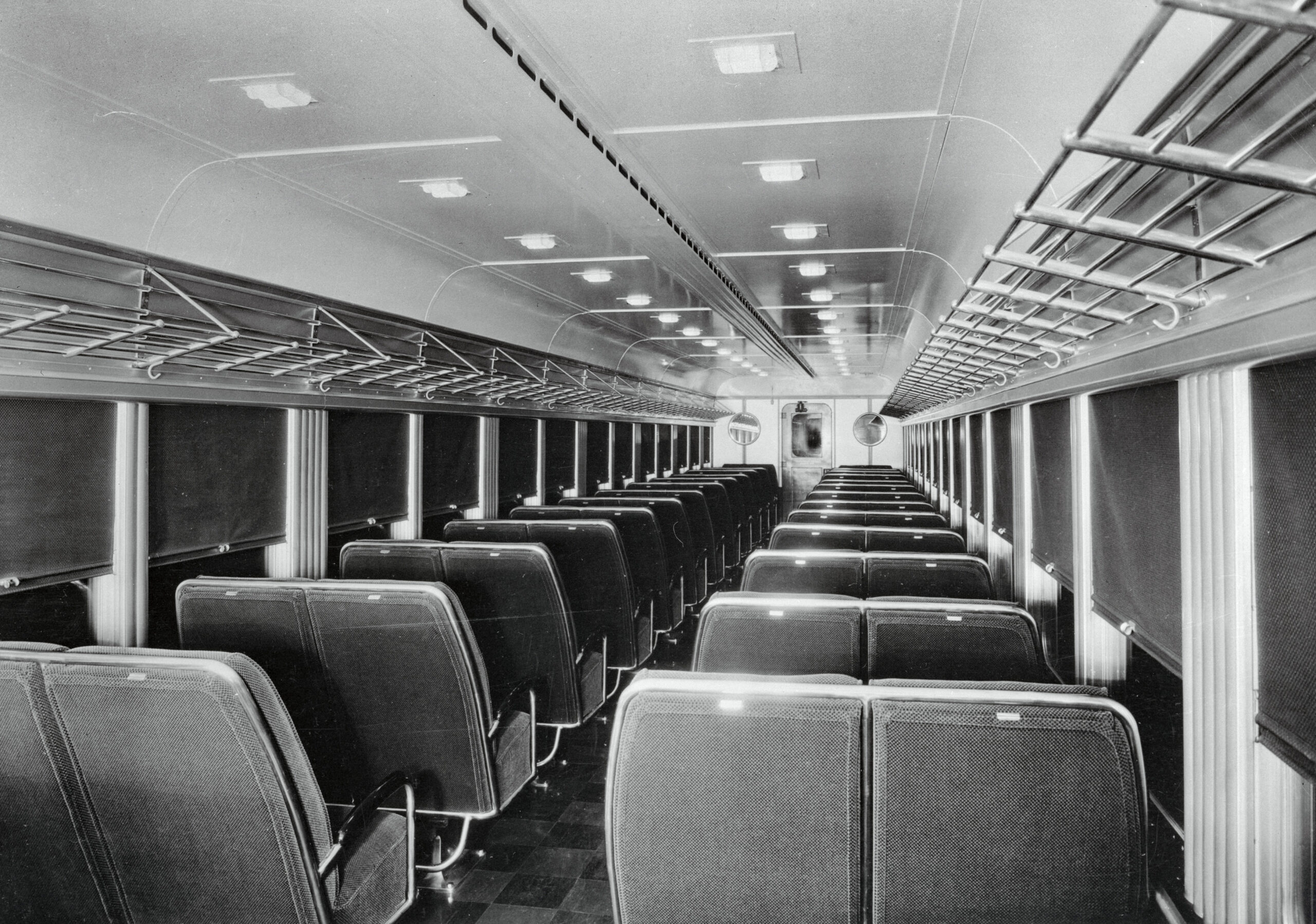
Small incidents can reveal much of significance beyond themselves: ways of thought, for example, or even the nature of cultures and subcultures. For example, on the train from London to Paris recently, I sat near a small group of young English women, dressed in the cheap, glossy, figure-hugging finery that, no matter their figures, they thought glamorous. They talked loudly the whole way and interspersed their conversation with prolonged shrieks, or sometimes cackles, of laughter.
It used to be said by the French that the English took their pleasures sadly; now, alas, they take them loudly. I think that the two ways of taking pleasure are related dialectically. In the loudness is desperation, not joy; they behave like people who are trying to convince others, and perhaps themselves, that they are having a wonderful time, that they are happy. Quiet enjoyment is something quite beyond them, even in theory.
In this, they are the victims of the cult, ultimately derived from psychotherapeutic notions, of self-expression as a good in itself, no matter what is expressed, how it is expressed, or in what circumstances it is expressed. A thought or emotion that is not expressed outwardly will turn inward and fester, and therefore self-restraint or control is a kind of treason to the self.
I decided that I should say something to these young women, who were probably thoughtless rather than deeply malicious, but I waited till very nearly our arrival before approaching them. Not to say something would be to assume that they were incapable of self-modification, and would be, worse still, cowardice. I waited in order not to appear intolerant or too easily angered, and I spoke much more mildly than my inner thoughts might have prompted me to speak.
I addressed myself to one of them, who had a handsome but slightly hard face. I asked her discreetly whether, on their return, she and her friends might make less noise and talk more quietly.
“Are you saying that I was noisy?” she asked defensively, and rather aggressively.
“No,” I replied, “I was talking about your group.”
“But are you saying that I was noisy?”
“No, not you specifically, but your group as a whole.”
“It’s a girls’ event,” she said.
That was an interesting reply. Behind it, I surmise, was a whole hinterland of semi-formed ideology. It supposed that women had for centuries been constrained to sit quietly in the corner, weaving, spinning, or knitting, and saying very little. They had been both oppressed and suppressed. Now it was their turn to be heard, without restraint or apology. Their conduct was a form of revenge, restitution, and exercise of power. A girls’ event conferred on them a plethora of rights that were inalienable.
“Nevertheless—,” I began.
“Is this a quiet coach?” she asked defiantly.
“No,” I said, “but out of consideration for others—”
Another of the young women, with a rather more pleasant face (and perhaps, not coincidentally, dressed with greater refinement than the others), said, “I didn’t realize we were making so much noise.”
So there was hope yet, if she had the courage to speak out in her group.
The question, whether this was a quiet coach, was an interesting and revelatory one. What it implied was that either there was a rule against making noise there, or there was no limit to the amount of noise that people were entitled to make. What is not forbidden is permitted. Self-control is redundant.
Of course, if there are rules, there must be rule-makers. But if everything is permitted against which there is no rule, then it is up to the rule-makers, and to them alone, to decide the limits of the permissible. They are the ultimate, and indeed only, moral guides—though a morality that consists of compliance with enforced rules is no morality at all, only mere obedience to power.
Unfortunately, such a coarse conception of human interaction leads inevitably to the limitation, not the extension, of liberty. Where disorder is permissible, and the permission is taken, there will eventually be a reaction. Burke expressed this well nearly a quarter of a millennium ago, in his Letter to a Member of the National Assembly:
Men are qualified for civil liberty in exact proportion to their dispositions to put moral chains upon their own appetites. Society cannot exist unless a controlling power upon will and appetite be placed somewhere. The less of it there is within, the more of it there must be without. It is ordained in the eternal constitution of things that men of intemperate minds cannot be free. Their passions forge their fetters.
And he continued, “This sentence the prevalent part of your countrymen execute on themselves.”
The young women on the train had no disposition to place moral chains on their wish to talk loudly, scream, shout, and impose themselves on others. They almost certainly thought of freedom as the complete absence of such moral chains. For the moment, they were undisturbed in the enjoyment of what they thought was their liberty; and, of course, such conduct as theirs in trains is in itself a minor matter.
Subscribe Today
Get daily emails in your inbox
But a disposition is precisely that: a general inclination, and it is unlikely that those who feel no need to control themselves in the noise they make in a train out of consideration for others will control themselves well in other situations. Once the principle that all that is not forbidden by the authorities is permissible in all other senses becomes widely, if not universally, accepted, disorder inevitably will result, including in the lives of those who hold the principle. As Burke put it, they execute it on themselves; they forge their own fetters.
A reaction might be—I cannot say for certain that it is—coming: that of authoritarianism, which is another way to forge fetters, albeit of a different kind. Excessive disorder will bring forth a demand for excessive order. Between enslavement to the passions and enslavement to the state there is a happy medium: It is called self-control.
One further reflection: There were 72 passengers in the coach, of whom only six were loud and coarse, everyone else behaving well—a small minority, then, fewer than 10 percent. But from the point of view of setting the tone, that minority were the elite.