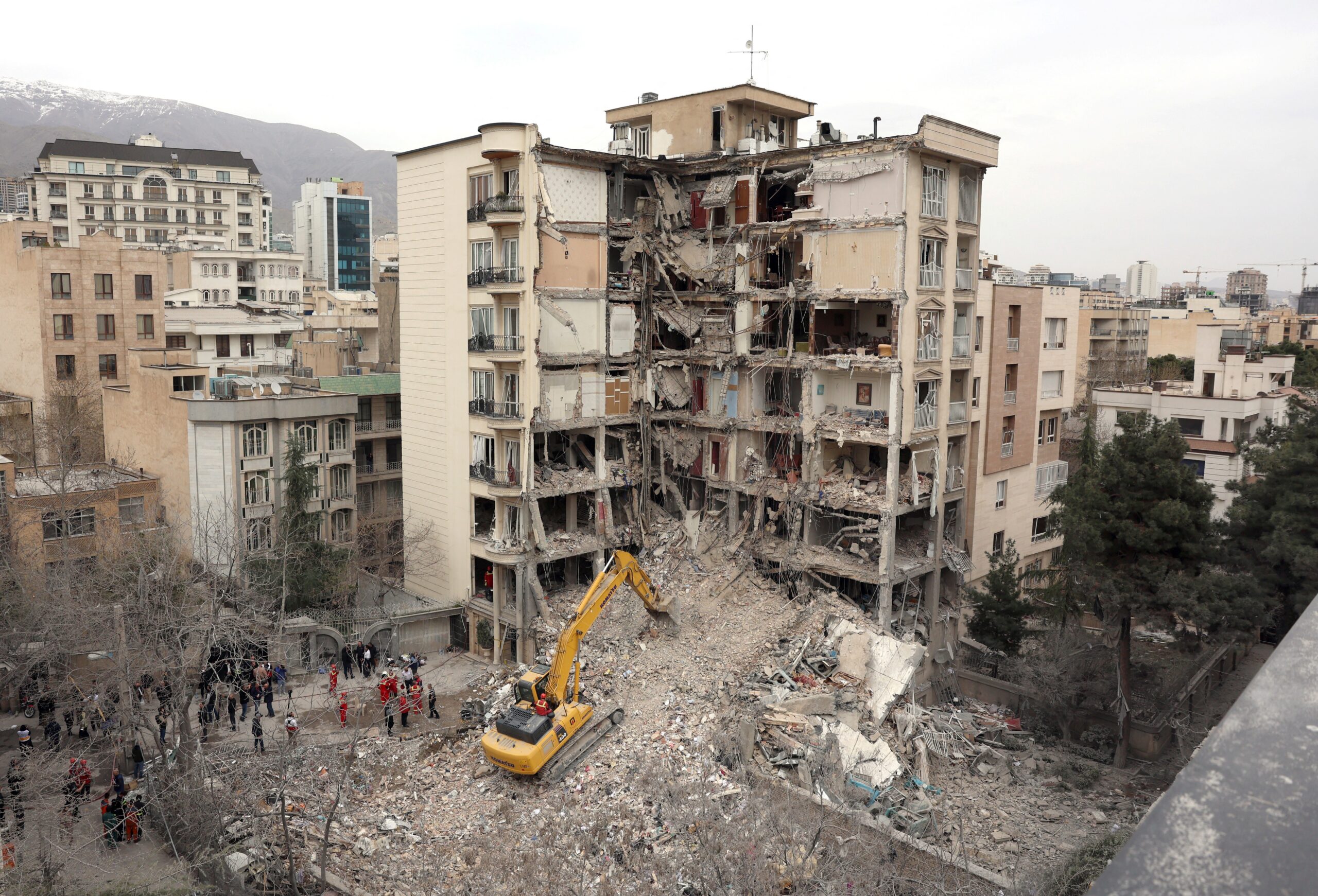
Some Disturbing Links Between the Ukraine and Iran Wars
America’s dealmaker-in-chief has created an escalating geopolitical catastrophe.
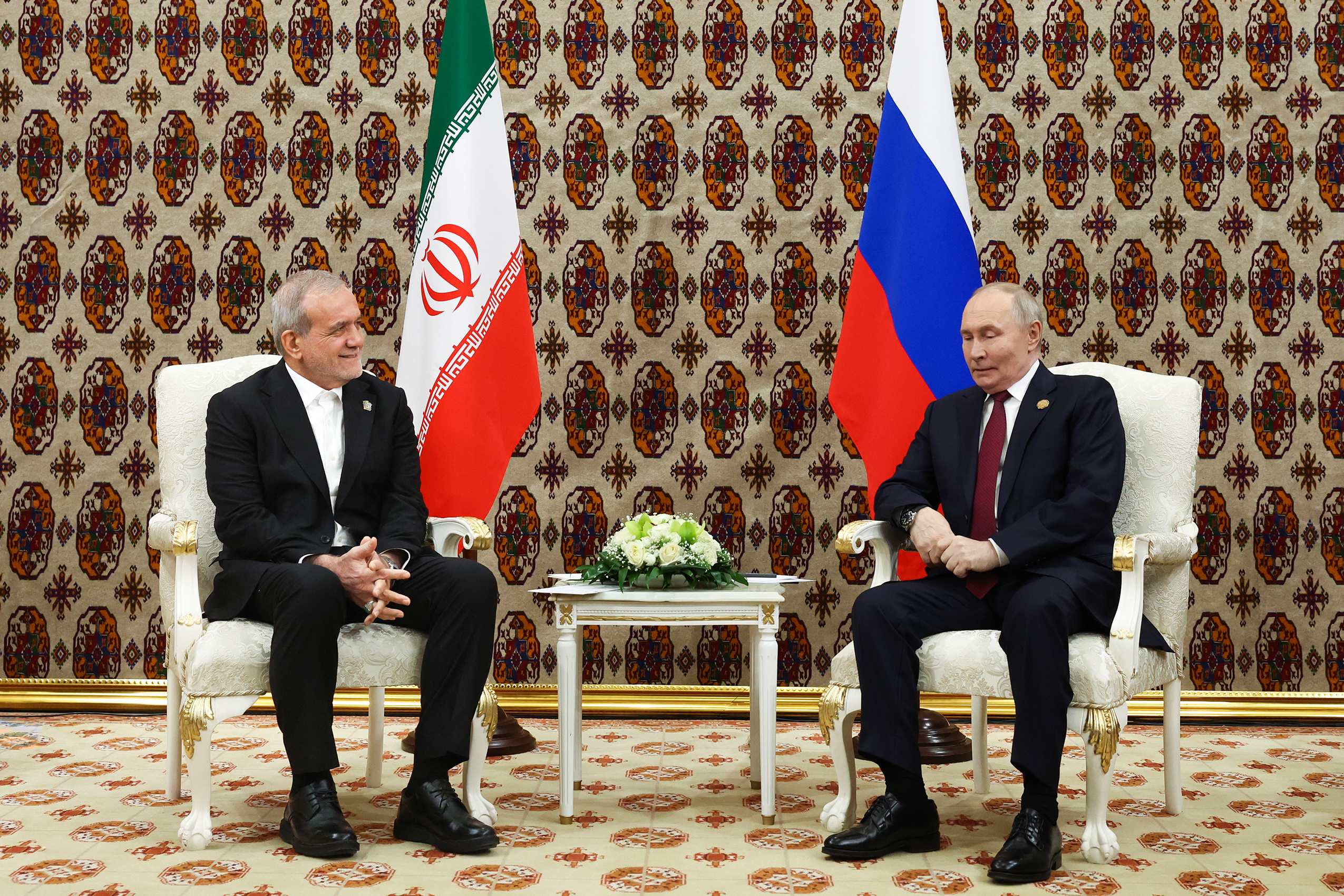

First, the bad news: The Iran War shows no signs of ending soon. Tehran on Monday said it would suspend peace talks with the U.S. in protest of Israeli strikes in Gaza and Lebanon.
Now, the even worse news: The Iran War is linked to the Ukraine War in myriad disturbing ways, and the longer the former drags on, the more dangerous the latter becomes.
Talk of “World War III” tends to be ludicrously overwrought—crafted to generate clicks and grab eyeballs on social media, rather than highlight geopolitical risks—but the connections between these two wars have, if anything, been underdiscussed.
The most notable connection: Russia has helped Iran, a strategic partner, target U.S. assets in the Middle East—payback for American support for Ukraine’s own war effort. Judging by the surprising precision with which Tehran has targeted those assets, Moscow seems to have provided excellent intel.
That was hardly an unforeseeable consequence of President Donald Trump’s war. A few days after the U.S. and Israel launched strikes on Iran in late February, Rosemary Kelanic of Defense Priorities told The American Conservative that she expected Russia to aid Iran, if only to create a quid pro quo.
“Now Russia could help Iran target U.S. bases throughout the region,” Kelanic warned, “and then use that as a bargaining chip and say, ‘Hey, we’ve told you stop arming the Ukrainians for a long time, so how about you stop arming the Ukrainians and we’ll stop arming or helping Iran?’”
Kelanic’s warning proved well-founded, but the U.S.-led West didn’t suspend its support for Ukraine as Moscow probably hoped. Still, the Kremlin has found ways to exert its newfound leverage.
After Russia’s foreign minister threatened last week to escalate strikes in Ukraine, warning American and European governments to evacuate their citizens from the capital Kiev, Anatol Lieven of the Quincy Institute discerned several reasons Russia is feeling so emboldened, including this: “If Washington decides to increase its aid to Ukraine, Russia could offer corresponding help to Iran in its own targeting with missiles and drones, bringing the likelihood of U.S. casualties.”
And that’s not the only way that the Iran War has helped clear Russia’s path to escalation. As Ukraine’s President Volodymyr Zelensky, with increasing hysteria, has warned, Kiev is running dangerously low on air defense interceptors, and Washington hasn’t responded to his call to provide more. One big reason why? The U.S. rapidly burned through its own stock of interceptors defending its assets and Mideast partners from Iranian attacks.
Bogged down in the Middle East, the U.S. has backed off its diplomatic efforts to mediate a peace deal between Russia and Ukraine. As I have reported, Trump never put together a team of professional diplomats to hammer out an agreement that Russia and Ukraine could both agree to. Now, his small team of amateur diplomats—led by the real estate investor Steve Wiktoff, Trump’s friend—is distracted by a Mideast crisis that threatens to melt the entire global economy.
To make matters worse, after the U.S. and Israel launched a surprise attack on Iran amid negotiations, the Russians trust American negotiators even less than they did before. Russia’s President Vladimir Putin was already concerned about possible assassination plots. The American-Israeli strikes that killed Iran’s supreme leader and other high-ranking officials surely didn’t help calm his nerves.
Before the Iran War, Russian national security elites used to ask me: If we make a deal with Trump, how can we be sure a future Democratic president won’t rip it up? But after the war began, they started to ask if Trump wasn’t running the same playbook against them that he seems to have run against Iran: lull an adversary into a false sense of security with negotiations, then escalate militarily.
“The Iranian experience will not be left unnoticed,” the Russian analyst Fyodor Lukyanov told TAC. “In general, one can say that the chance to reach a negotiated solution has decreased now.” I have asked numerous Russian analysts and officials whether this sentiment is widespread among political elites in Moscow, and all have answered yes.
Of course, Iran too lacks trust in American negotiators, which is one reason that meaningful diplomatic progress between Washington and Tehran has proven so elusive. “Nothing could be described as finalized with a team that has no fixed professional or moral frame, that is whimsical and changes its demands constantly,” a senior Iranian official told Amwaj.media last week.
Subscribe Today
Get daily emails in your inbox
Donald Trump, America’s dealmaker-in-chief, faces alarming and connected geopolitical crises. The peace deal he engineered in Gaza and the ceasefire he secured in Lebanon have broken down, as Israel escalates militarily to sabotage U.S.–Iran peace talks. With the Iran War unlikely to soon end in a negotiated settlement, expect Russia to remain 1) distrustful of U.S. diplomacy, 2) eager to aid Iran’s war effort, and 3) tempted to escalate in Ukraine.
As if that wasn’t enough: With Washington’s armaments and attention depleted by an escalating crisis it sparked in the Middle East and a war in Ukraine it helped provoke, might Beijing spot a fleeting opportunity to invade Taiwan, which it views as a renegade province?
This may not yet be World War III, but it’s no longer hyperbolic to worry about the possibility. Buckle up.