Labour’s Doomed Pivot Toward Europe
The British government is wistfully hoping to relitigate Brexit, but it won’t work.
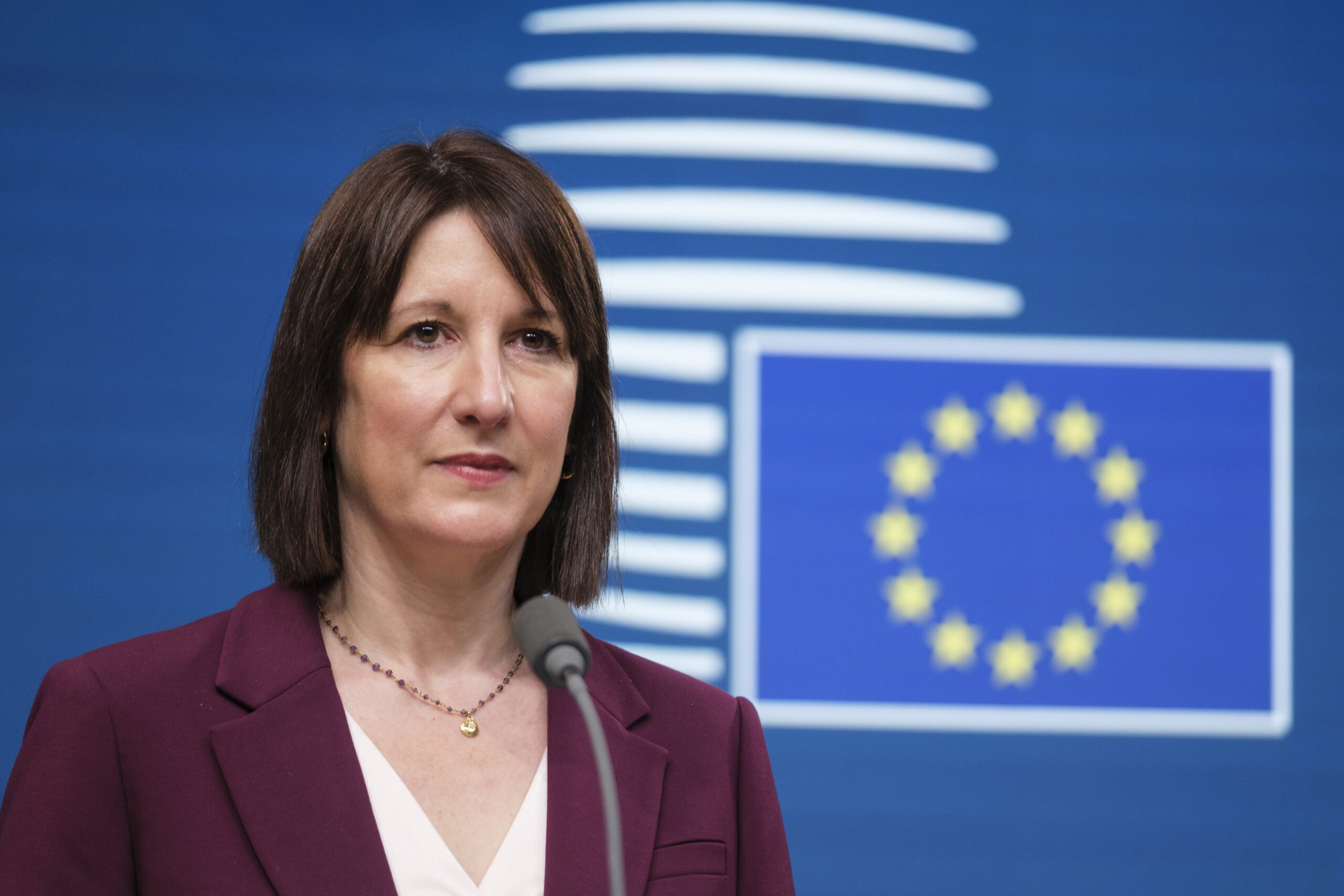
When the British Chancellor of the Exchequer Rachel Reeves was asked by the Times last week to choose between Donald Trump and Ursula von der Leyen, the head of the European Commission, she replied without a moment’s hesitation: “Ursula von der Leyen.”
“I believe that our future is closely intertwined with Europe,” she added. Take that, MAGA man.
You might have expected Reeves to have given a rather more diplomatic answer, given that the American president is the effective boss of NATO and her leader, Prime Minister Keir Starmer, has been trying to secure a comprehensive trade deal with the United States for the last 18 months. So eager has Starmer been to promote personal ties with Trump that he awarded him an unprecedented second state visit, complete with banquets at Buckingham Palace and flattery from King Charles.
But it looks very much as if Britain is now drifting back into the European orbit, 10 years after the referendum vote to leave the EU. Hostility to MAGA among the political classes has been compounded by the Iran war and the recent fallout over the closure of the Strait of Hormuz. It has pitched the Labour government, at least rhetorically, in a decidedly European direction.
Not that it needed much encouragement. The dream of reentering the European Union, or at least the Single Market, is one of the few issues that unites the right and left of the Labour movement. Reeves may have said repeatedly that reversing Brexit is “not going to happen,” but her actions belie her words.
In her annual Mais Lecture on Tuesday, Reeves made the case for ever-closer alignment with Europe as a “strategic imperative,” insisting that Brexit had been “bad for Britain.” Her civil servants are to conduct a major audit of all sectors of the economy to identify industries that could benefit by aligning themselves more closely with European regulations.
The UK has already started aligning with EU rules on food and agriculture standards in an effort to remove SPS checks and other red tape. Reeves wants this extended to chemicals, aerospace, and other high-tech areas. Labour’s ambition is to make Britain a global hub for artificial intelligence.
But joining the European Union’s dense regulatory environment might not seem the obvious way to do this. For years, Brussels has been placing roadblocks in the path of tech companies like GDPR, the Digital Markets Act, and the like. It is no accident that Europe, despite its highly educated population, has generated no big tech company to rival Apple, Microsoft, Amazon, etc.
The European Union prides itself on being a “regulatory superpower.” Many of its rules and laws will prevent the UK from accessing tech markets, however much Labour tries to emulate them. The European Union has always been one of the world’s great protectionist blocs, but it is becoming ever more so.
Its current “Made in Europe” agenda requires 70 percent of components in many goods sold in the single market, like wind turbines and electric vehicles, to be of European origin. Reeves seems to think that, by voluntarily shadowing EU regulations, whatever the cost, Brussels will start regarding components made in the UK as essentially European. It assuredly won’t.
The EU is firmly against what it calls “cherry-picking,” meaning gaining sectoral access to the single market. It’s all or nothing. If the Brits want friction-free access, they are going to have to pay up or start negotiations to rejoin the trading bloc. Recent attempts at sectoral alignment, such as gaining access to European defense procurement, have come with such a high price tag that the UK had to stop negotiating.
But many academics, media organizations, and politicians of all parties dearly wish to reverse Brexit and get back into Europe. So would many multinationals, who used the UK as a means of entry to the Single Market. The EU is one of the great divides between the educated elites, often called the “lanyard classes,” and lower-class Brits who are suspicious of globalization and the loss of sovereignty. Parties like the Greens and the Liberal Democrats are making rejoining Europe a headline policy.
But the hard reality is that reentry isn’t going to happen, and not just because Nigel Farage’s Reform UK, which is resolutely anti-Europe, is leading the opinion polls right now. Brussels isn’t ready to make nice. There is no way the UK could be restored to the European Union, or even to the European Economic Area, without accepting conditions that many British voters would find onerous.
Before 2016, Britain had a unique deal with Brussels. It had opt-outs from the Single European Currency and from the borderless Schengen zone. It also had a hefty rebate from its contributions to the EU budget. If Britain applied to rejoin it would have to agree to adopt the euro, accept freedom of movement, and make a gross contribution to the EU bureaucracy of £21–£26 billion per year.
Britain would also have to abandon or revoke bilateral trade deals with non-EU countries negotiated since Brexit. For example, British membership in the Indo-Pacific trading partnership, the CPTPP, covering countries like Japan, Australia, and Mexico, would be incompatible with renewed membership of the Single Market. Finally, reentry to the EU would surely plunge the UK into another bitter and divisive referendum campaign just when the wounds from the last one were beginning to heal.
So why is the Labour government flogging this apparently dead horse? Well, a lot of it is performative. Blaming Brexit has become the number one excuse for the UK’s current economic problems of low growth, high debt, and a lingering cost-of-living crisis. It provides an alternative narrative to divert attention from Reeves’s £80 billion tax increases, which have crucified small and medium-sized businesses, caused job losses, and increased inflation.
There is a plausible argument that the British economy has been damaged by Brexit and Europe’s subsequent trade barriers. The independent Office for Budget Responsibility estimated that the UK’s GDP would be up to 4 percent higher long term had it remained in the single market. Yet this is highly speculative.
Subscribe Today
Get daily emails in your inbox
There have been so many shocks to the system in the last decade—Covid, Ukraine, and successive energy crises—that it is difficult to isolate the Brexit factor. Britain is not alone in experiencing weak GDP growth. In fact it has performed rather better in recent years than European economies like Germany.
The global poster-child for growth in the West has been the United States, from which the UK now seems to be content to turn away. The UK government seems to think that the current disruption to the global economy is none of its business, and Starmer is congratulating himself for not getting involved in the Iran war.
Nor does the European Union seem to think its wellbeing could be affected by what happens in the Strait of Hormuz. But Britain and Europe are dangerously exposed to international competition, soaring energy prices, and potential coercion from Russia and China as well as Iran. By choosing the EU over the U.S., Rachel Reeves may be backing a loser.