The Logic of Voter ID
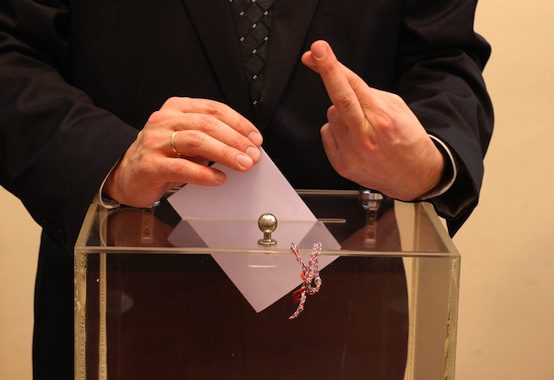
The voter ID law recently enacted in Pennsylvania and which already operates in other states has occasioned considerable controversy. Although a majority of Americans polled favor the idea that would-be voters should be required to identify themselves with a license or with some other persuasive document, opposition persists. Allow me to express my considered view, which was also the position taken by the Supreme Court in 2002, that there is nothing constitutionally wrong with recent measures taken against voter fraud. They do not single out minorities; and the attempts being made by Attorney General Eric Holder, at the bidding of President Obama, to get the laws rescinded as an extension of the poll tax once used in the South to depress black turnout, are groundless. All that voters are being asked to do is provide evidence that they have a legal right to vote.
One counter-argument is that although Republicans may gain in the short run by enacting voter ID laws, they will permanently lose the good will of certain groups. But this is entirely unconvincing. Those who may be excluded by the laws would never likely vote Republican; and those who have complained the most loudly against the laws are black advocates and Democratic operatives, neither of which group seems to be a promising target for Republican persuasion. Despite recent attempts by Mitt Romney to court the black vote, he will not likely obtain more of it than McCain, who picked up only five percent. Would it pay for Pennsylvania Governor Corbett and other Republican politicians to reject voter ID measures on the grounds that they may alienate those who already decidedly against them?
This is like imagining a situation in which Obama and Holder would refrain from challenging known Christian traditionalists and NRA lobbyists who are improperly registered to vote. The Dems would be fools if they did this. And let me hazard the assumption that those who are criticizing Republican support of the ID measures would not object in the least if the present administration found some legal means of preventing their opponents from voting.
In the end, however, Obama may be facing a serious problem. In Pennsylvania the need for a license ID or some other valid voting identification may result in the loss of over 700,000 votes for the Democratic presidential candidate. This is not only the view of Democratic county chairmen across the state but also the stated opinion of Allegheny County state representative (and House Majority Leader) Mike Turzai. According to Turzai, a Republican, the enforcement of the photo ID law that Corbett recently signed will help Romney overcome the deficit he’d otherwise encounter running against Obama in Pennsylvania. This may permit the Republican candidate to win a state that has voted consistently Democratic in presidential elections for several decades. And the law seems to enjoy bipartisan backing, with up to 52% of Democrats expressing agreement, according to a Rasmussen poll taken last year. The public believes that voter fraud is rife; and Holder’s inattentiveness to such charges from Republicans, including empirical evidence of Black Panthers bullying Philadelphia voters in 2008, has generated a backlash.
Further, the Democratic response has been inadequate. It consists mostly of calling one’s opponents racists or accusing them of marginalizing those who have not bothered to register. There is of course a more constructive response. It is relatively easy to register neglectful or otherwise preoccupied voters, who are known to be in one’s camp. This was done in the case of black Democrats in Georgia in 20l0, after an ID measure was passed there and then upheld in court. Holder’s comparison of the ID requirement to Southern poll taxes is not likely to make new converts. It speaks exclusively to those who are already on his side. Moreover, the Attorney General’s appeal to the 1965 Voting Rights Act (passed ironically with overwhelming Republican support) to challenge the right of Southern states to amend voting requirements, is a stalling tactic. It is intended to keep voting requirements from being applied until after the presidential election. Unfortunately for Holder and his boss, the measures will have their strongest effect in battleground states like Pennsylvania and Ohio, which were never subject to the Voting Rights Act.
Obama may believe that a purely practical response to his opponents’ strategic move may not fit his ideologically driven style. Better to scream insensitive or racist and then drag out the civil rights apparatus left from the 1960s. That’s the way he and Holder operate; and with a cooperative media, what the hell. Why not go for it? But this method will not enable Obama to counter the Republicans’ tactical move. Turzai is crowing because he thinks he has the other side cornered. Sensibly he has not accused his opponents of being anti-Christian or anti-patriotic–or whatever else GOP publicists like to call Democrats.
Paul Gottfried is a professor at Elizabethtown College and the author, most recently, of Leo Strauss and the Conservative Movement in America: A Critical Appraisal.