
Why Is the Japanese Government Cracking Down on This Church?
The Unification Church has had a long, strange political trip in the Land of the Rising Sun.
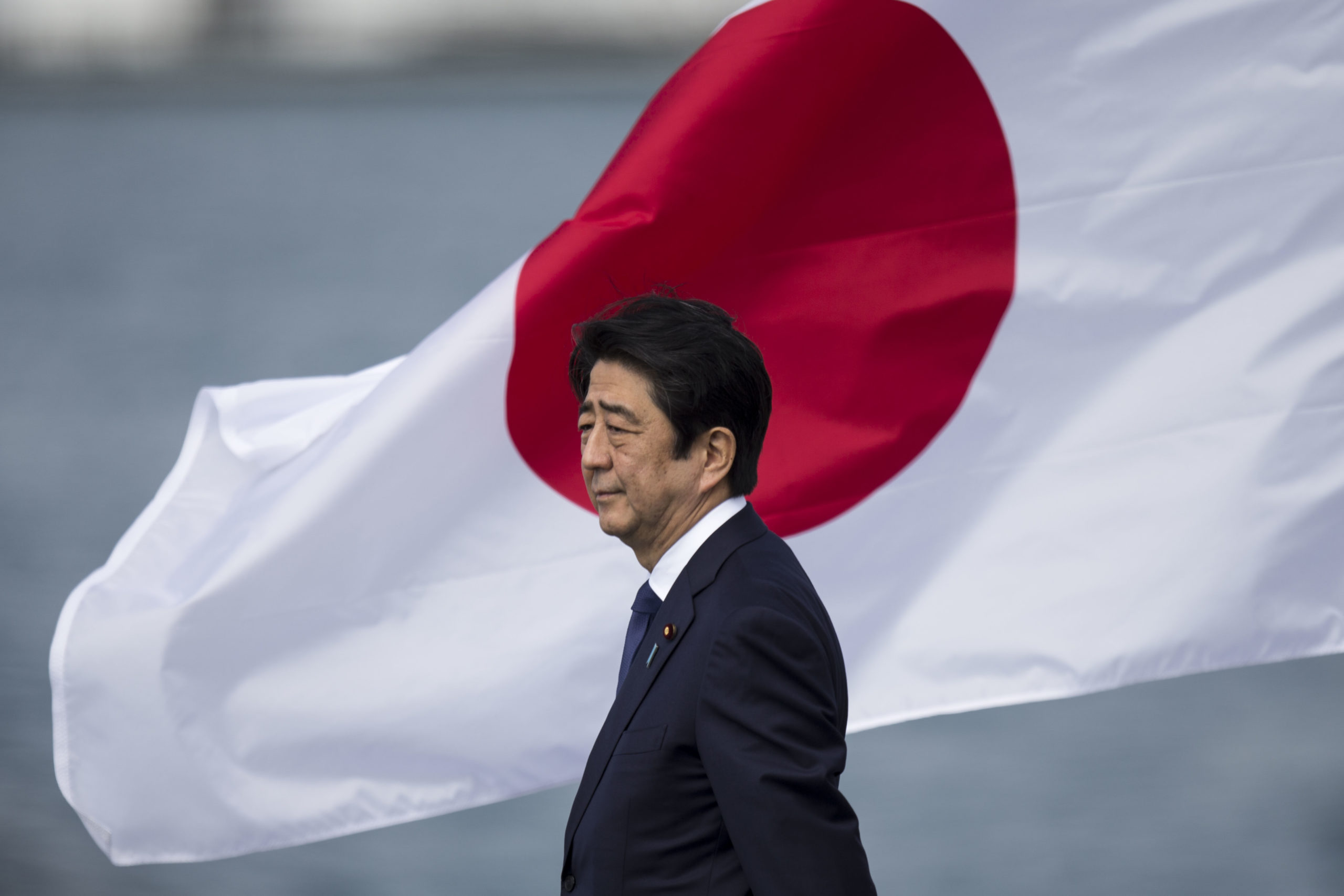
On January 21, 2026, Yamagami Tetsuya, accused of murdering former prime minister Abe Shinzo on the streets of Nara in July, 2022, was sentenced to life in prison (“imprisonment indefinitely”) for his crimes. The district court trial for the assassination concluded on December 18, 2025. Yamagami declined to make a final statement at the trial. On February 4, 2026, Yamagami’s attorney announced they would appeal.
Ever since Abe was gunned down more than three and a half years ago, media attention has focused almost exclusively on the motive that Yamagami is said to have related to police after he was apprehended in flagrante delicto with the alleged murder weapon lying on the ground near where he was tackled. According to the endless media reports, Yamagami claims to have killed Abe over a grudge against the Unification Church, the Japanese branch of a religious organization founded by the late Reverend Sun-myung Moon of South Korea and commonly referred to as “the Moonies.” Yamagami’s mother is said to have donated over 160 million yen (approximately $1 million) to the church over a span of some 15 years. Yamagami blames these donations for his family’s difficult financial circumstances. Yamagami claims that he wanted to kill Han Hak-ja, Moon’s elderly widow, but missed his chance, and so decided to kill Abe instead. Yamagami pointed to a short video message of support that Abe sent in September, 2021 to the Universal Peace Federation, a church-affiliated peacebuilding NGO in general consultative status with the United Nations.
Abe was never a member of the Unification Church. His connection with the organization does not appear to have extended much beyond this brief message and a handful of other similar ones.
But while the media frenzy over Abe’s murder and Yamagami’s motive was raging in Japan, I began to question not only the endlessly-repeated narrative surrounding the July 2022 tragedy in Nara, but also the lack of deeper reporting on the history of the Unification Church.
For one thing, half of Yamagami’s mother’s donations was refunded more than a decade before Yamagami decided to take out his anger at the Unification Church on a virtually unrelated victim. Yamagami himself was named in the settlement by which the funds were returned to his mother. He committed to not sue the church, and formally agreed that the settlement put an end to the conflict.
For another, many Unification Church believers have spoken out about the Japanese government’s persecution of their faith group. The real reason they are being destroyed, many say, is that they are pro-family, conservative supporters of the late Abe, and opposed to the fundamental social change that the anti-Abe faction is pushing on Japan. One example of this social change is the pro-LGBT legislation the former prime minister and longtime Abe nemesis Kishida Fumio rammed through the Diet at the behest of Rahm Emanuel, then the American ambassador to Japan, in 2023.
It was also Kishida, acting as prime minister, who in 2022 twisted the interpretation of Article 81 of the Religious Corporations Act to construe civil torts as violations of public welfare, thus dooming the Unification Church to formal dissolution at his command.
At a Tokyo cafe on a blustery evening in late 2025, Kondo Norishige, Deputy Director of Legal Affairs Department for the Family Federation for World Peace and Unification (the organization formerly known as the Unification Church), and Patricia Duval, a French attorney who has litigated at the United Nations some of the human rights aspects of the Unification Church’s treatment in Japan, provided more detail about the Abe-Yamagami case. It turns out there is, indeed, much more to the murder of Abe Shinzo than the Japanese media has been leading the public to believe.
While the Yamagami trial has been consuming much of the media oxygen in Japan, a much deeper issue is the Japanese government’s treatment of the former Unification Church. One major aspect of the ongoing legal battle, Duval says, is between international law about proselytization and religious freedom, and Japanese public order laws.
“Under the treaties signed by Japan, such as the International Covenant on Civil and Political Rights [(ICCPR)], there are only certain limitations that the state can put on freedom of religion and belief, including freedom to practice one’s religion and live out one’s beliefs,” Duval tells me.
But the Japanese government has cited the Unification Church’s alleged offenses against public welfare as a reason to dissolve the organization.
“The limits on governments when it comes to restrictions on religious freedom are strictly listed in the ICCPR at Article 18:3,” Duval explains. “Therefore, signatories to the covenant should respect the norms to which they have committed themselves. This is why ‘public welfare’ is not a possible limitation on religious freedom. Also, ‘public welfare’ is in itself too vague a notion, because it can encompass virtually anything, according to the state’s prerogatives. ‘Public welfare’ is a convenient way to say that if a minority is undesirable it harms citizens in some way. This is exactly what happened to the Unification Church.”
According to Duval, Japan’s Ministry of Education, Sports, Culture, Science, and Technology (MEXT) requested the dissolution order against the Unification Church, saying the church had harmed or disrupted people’s lives, including family members of believers. The ministry argued that this constituted substantial damage to public welfare—a novel subjection of law to social norms.
Duval says that in Japan, “faith has become seen as a form of mental incapacity following a decision issued by the Tokyo High Court on December 18.” That ruling found that a donation to the Unification Church was illegal due to an alleged impaired ability of the donor to make an appropriate judgment, since she was “under the influence of the religious doctrine” of the Church.
This is the same court, Duval continues, that “is currently deliberating on the possible dissolution of the church due to donations deemed illegal on the same grounds of ‘undue influence’ and lack of social appropriateness.”
Duval points out that four special rapporteurs of the United Nations—one on freedom of religious belief, one on freedom of association, one on minority issues, and one on education—had concluded that the line of reasoning used by MEXT was problematic.
“In April of 2024,” Duval says, “a document issued by special UN rapporteurs, including Nazila Ghanea, expressed concern that the ‘Q&A Guidelines’ issued by the Japanese Ministry of Health, Labour and Welfare may foster further stigma, hostility, and violence against religious minorities, such as the Jehovah’s Witnesses. Such a position would also obviously be in violation of principles of freedom of religion.”
It is unclear what the Unification Church had done to offend social norms in the first place. Per Duval, even the religious donations that Yamagami claims plunged his family into ruin and sparked his desire to kill a major world figure do not look so bad for the church as Japanese lawyers have characterized.
“The notion that religious donations are spiritual sales is completely contradictory,” she says. “Religious donations are taken for not-for-profit purposes.” These include “humanitarian and missionary activities,” in Africa and elsewhere; the church claimed in court filings that there was no personal profit made off donations, for the Reverend Moon himself or anyone else.
The Unification Church’s association with the Korean peninsula, a place with which Japan has long had a fraught political and historical relationship, has not helped its popularity. Many in Japan see the Church as having been a front for importing Korean influence into Japan while exporting Japanese cash to Korea.
While funds did flow through the church’s headquarters in South Korea, Duval says it is “not true” that they stopped there. “That is not what is in the case file. Nevertheless, the district court did not even mention this,” she said. “It completely ignored this fact and decided that the solicitation of donations was malicious, which matches the testimonials of people who had been ‘deprogrammed’, that is, forced to renounce their belief in the teachings of the Unification Church.”
The mention of “deprogramming” reveals much about the extent of the Japanese government’s, media’s, and legal establishment’s persecution of the Unification Church.
“As part of their so-called ‘rehabilitation’,” Kondo notes, “people who were undergoing ‘deprogramming’ were required to go to the media and denounce the Unification Church, and were also required to participate in the ‘deprogramming’ of other members still under confinement, all as proof of their deprogramming bona fides.
Much of this chain deprogramming, or negative indoctrination, was done from the mid-1980s onward on the premises of Protestant churches and overseen by Protestant pastors. But as these activities expanded, church facilities alone became insufficient to accommodate them. Moreover, to avoid detection by fellow believers searching for the whereabouts of those who had been confined, locations other than church facilities came to be used. Parents were systematically told to rent premises suitable for confinement, with the doors and windows padlocked.
Deprogrammer pastors, Kondo tells me, often conducted more than five deprogramming operations simultaneously.
“In addition,” Kondo continues, “those who had been ‘deprogrammed’ were later brought to lawyers to file financial claims against the Unification Church. Church lawyers pointed out that it is outrageous that claims filed under coercion should be admitted as legitimate testimonials in a court. The Japanese courts ignored, however, the fact that claims and criticisms were made under coercion.”
“In 2014,” Duval adds, “I and Mr. Kondo worked together in Geneva on a case before the United Nations Human Rights Committee [UN HRC]. The Committee issued a report urging Japan to put an end to the ‘forced deconversion’, as the report called deprogramming, of members of new religious movements. Japan answered that it was unaware of forced deconversion, even though it had been going on for 40 years.”
This disavowal is implausible. “A Japanese lawyer, Fukumoto Nobuya, gave me affidavits from when he tried to save some members under confinement,” Duval says. “Fukumoto, as well as some other lawyers working on behalf of confined believers, had obtained written power of attorney at the request of believers in case of their confinement, but written power of attorney was often not respected. The family members argued that the deprogramming was a family affair. The police, when called, tended to agree and defer to the parents. Lawyers were therefore often unable to free those who had been detained and confined.”
The practice of forcibly detaining and confining religious believers, sometimes for years on end, in order to get them to denounce their faith is not unheard of in Japan. Not only more than 4,000 Unification Church believers, but also some Jehovah’s Witnesses have been taken against their will and subjected to mental and physical abuse.
“Goto Toru, who had been confined for more than twelve years, got substantial damages after a judgment in his favor by the Tokyo High Court in 2014,” Duval says. “The Supreme Court of Japan upheld the ruling in 2015. This was thanks to the work of Fukumoto as well as to the UN HRC recommendation.”
Goto’s case, while shocking, has also been virtually ignored by the mainstream Japanese media. Instead, the media have parroted the government’s arguments against the Unification Church, apparently as eager as Tokyo bureaucrats and politicians to stamp out religious belief in the country. One journalist even claimed that Goto was a “hikikomori,” or shut-in, thus denying that Goto had been abducted and imprisoned.
The problem of bias is as systematic as it is disturbing. It is far more than just the media that has set sights on the Unification Church.
“The Unification Church has not engaged in any crimes,” Kondo says. “Instead, the government used some 32 civil cases as evidence that the Church had greatly damaged public welfare. But the majority of these cases were the results of complaints which ‘deprogrammed’ former Church members had made under duress.”
According to documents provided by Kondo, consultations made with Japan’s Consumer Affairs Agency regarding disreputable practices by the Church make up a tiny fraction of the total cases fielded by the agency. In 2012, for example, there were 229 instances of consultations regarding the Unification Church, out of a total number of nationwide consultations totaling 848,689. The next year, 2013, saw 150 Church-related consultations out of a total of 925,843. The figures for the Unification Church show a pattern of overall decline over time.
“In June of 2022, the month before Abe was killed,” Kondo tells me, “the number of consultations against the Unification Church made up just 0.003 percent of the total.”
The number of cases went up sharply after July 2022, but this appears to be a function of politics more than a reflection of tortious activity on the part of the Unification Church.
Whether Yamagami truly thought he was avenging the wrongs committed by the Unification Church when he gunned down Abe in Nara is a matter of speculation. The Japanese mainstream media have certainly pushed that storyline to the hilt. But the Japanese media’s vendetta against the Unification Church is rooted in grudges much older, and more political, than Yamagami’s alleged animus.
Kondo tells me that the attorneys who have made careers and names for themselves out of publicly attacking Unification Church members are private lawyers working for an anti–Unification Church organization, the National Network of Lawyers Against Spiritual Sales (Zenkoku Reikan Shoho Taisaku Bengoshi Renrakukai).
“The group was created originally with a political agenda,” Kondo says. “The lawyers began attacking the Unification Church because of the stance taken by the Church against communism.
“Ultimately, this is about the fact that the Church was against communism. Yamagami’s actions provided the opportunity the lawyers had been waiting for to get revenge against an anti-communist organization.”
“The National Network of Lawyers Against Spiritual Sales,” Duval says, “was created in 1987, first in the Tokyo area in February and then nationwide in May. In that year the lawyers issued a public statement, very clear-cut, about eliminating the Unification Church from Japan. These lawyers were involved in getting parents connected with so-called ‘deprogrammers’, and then in defending the parents and deprogrammers in court. Some deprogrammers testified openly in court that they knew what they were doing was typically illegal, but they said it was protection, rescue. The Unification Church members were so deeply convinced of their faith, the deprogrammers said, that it was necessary to use physical restraint to deprogram them.” The courts have overlooked the illegality of these acts, as well as the statement of animus the group issued in 1987.
I ask whether the anti-church lawyers have connections inside the political and media arena. Is that, I wonder, how the lawyers and the deprogrammers are able to get away with abducting people?
“There is little doubt that they maintain close ties with the media and influential politicians, and that they exert influence on society,” Kondo replies.
“In addition,” Duval adds, “some Protestant pastors realized that they had a common enemy with communist lawyers, namely Unification Church members. So, the pastors and the lawyers began collaborating on deprogramming.”
“There are two kinds of pastors involved in deprogramming,” Kondo says. “Some pastors are purely interested in evangelical Christianity.” Kondo says he underwent deprogramming under this sort of pastor in 1987, being held in a parsonage for 40 days after having been taken from his home with his family’s connivance. Kondo alleges that the second type of pastor is a leftist cadre using religion as a cover for his agenda, which he says is particularly common in certain denominations.
The friction between the Unification Church and Japan’s communists is well attested. “It is a fact,” Kondo continues, “that communists were involved in the background of the anti-UC movements after the Yamagami incident and that they sought to dismantle the Family Federation. Indeed, Shii Kazuo, then-chairman of the Japanese Communist Party, stated in an interview with journalist Tahara Soichiro published in the November 6, 2022 issue of a weekly magazine named Sunday Mainichi, that the struggle against the Unification Church had been a long one and declared that they would continue fighting until it was finally settled.”
This background is important, but it still doesn’t explain how crimes like kidnapping and imprisonment went unpunished.
“When the National Network of Lawyers Against Spiritual Sales was founded in 1987,” Kondo says, “the central figure was a man named Yamaguchi Hiroshi, the secretary-general of the Network who also served as counsel for the Socialist Party in the case brought against the Party by the [UC-affiliated] Victory Over Communism group.”
The investigative journalist Fukuda Masumi’s new book, Kokka no ikenie (“Sacrificial victim of the state”) (2025, Asuka Shinsha), contains a chapter about Yamaguchi and other lawyers who have spent decades attacking the Unification Church. Fukuda alleges that the very term “spiritual sales” is an invention of members of the Japan Communist Party.
Fukuda also details the global ideological backdrop to the decades-long fight between Yamaguchi and the Unification Church. During the Cold War, anti-communists, striving to defend Japan in the face of leftist attempts at revolution, found themselves working against deeply entrenched pro-communist forces in the country. For instance, many Japanese communists and socialists were against a spy-catcher law because they were cooperating with leftist agitators from overseas.
“The Socialist Party was opposed to the movement to write anti-espionage legislation into Japanese law,” Kondo explains. “Those spearheading the movement, conversely, was a group known as VOC, Victory Over Communism [Kokusai Shokyo Rengo], which was affiliated with the Unification Church.
“Stanislav Levchenko had been a KGB spy in Japan, but he defected to the United States,” Kondo says. “During his testimony before Congress, Levchenko said that he had worked with many Japanese collaborators. Levchenko said that espionage in Japan had been easy, because there was no Japanese law against spying. Levchenko named names of those who had collaborated with him. Many of those people were leading Diet members from the Socialist Party in Japan.” Among those was Katsumata Seiichi, who at the time was the head of the Socialist Party. (Katsumata denied the allegation.)
“Those members were very upset to have been outed in public,” Kondo continued. “The Socialist Party used their party newspaper to push the narrative that the Levchenko incident was ginned up by the VOC and the CIA, but this was not true. The VOC filed a defamation lawsuit against the Socialist Party of Japan, and won in the first instance. The Socialist Party had a lawyer named Yamaguchi Hiroshi.”
Yamaguchi is the same man who went on to form the lawyers’ group that has spent nearly four decades trying to put an end to the Unification Church in Japan.
“We were almost successful in having an Anti-Spy Law passed in Japan,” Kondo reflects, referring to the debates in recent years about the proposed legislation as Chinese and North Korean espionage has intensified. “Almost, but not quite. We were defeated by the strenuous opposition of the Kochikai faction inside the LDP [Liberal Democratic Party].”
Subscribe Today
Get daily emails in your inbox
The Kochikai is an old faction within the LDP first started in 1957 by Ikeda Hayato, who went on to serve as prime minister during the early years of the income-doubling era in the 1960s. The faction was officially dissolved by then-prime minister Kishida Fumio in 2024, but the former Kochikai members remain as the core of what has become the anti-Abe wing of the LDP.
“This is an old political battle,” Kondo concludes.
“Yes,” Duval adds. “Politically motivated lawyers allied themselves with some Protestant factions who saw the Church as a competitor. They won’t stop until they have eliminated the Unification Church. This is their stated goal. It has always been their goal. The assassination of Abe was an opportunity for these activists to make the Church the scapegoat and to push their agenda.”