
Ticks and Birds
In the dualist struggle between beauty and ugliness, ugliness seems to be getting the better of it.
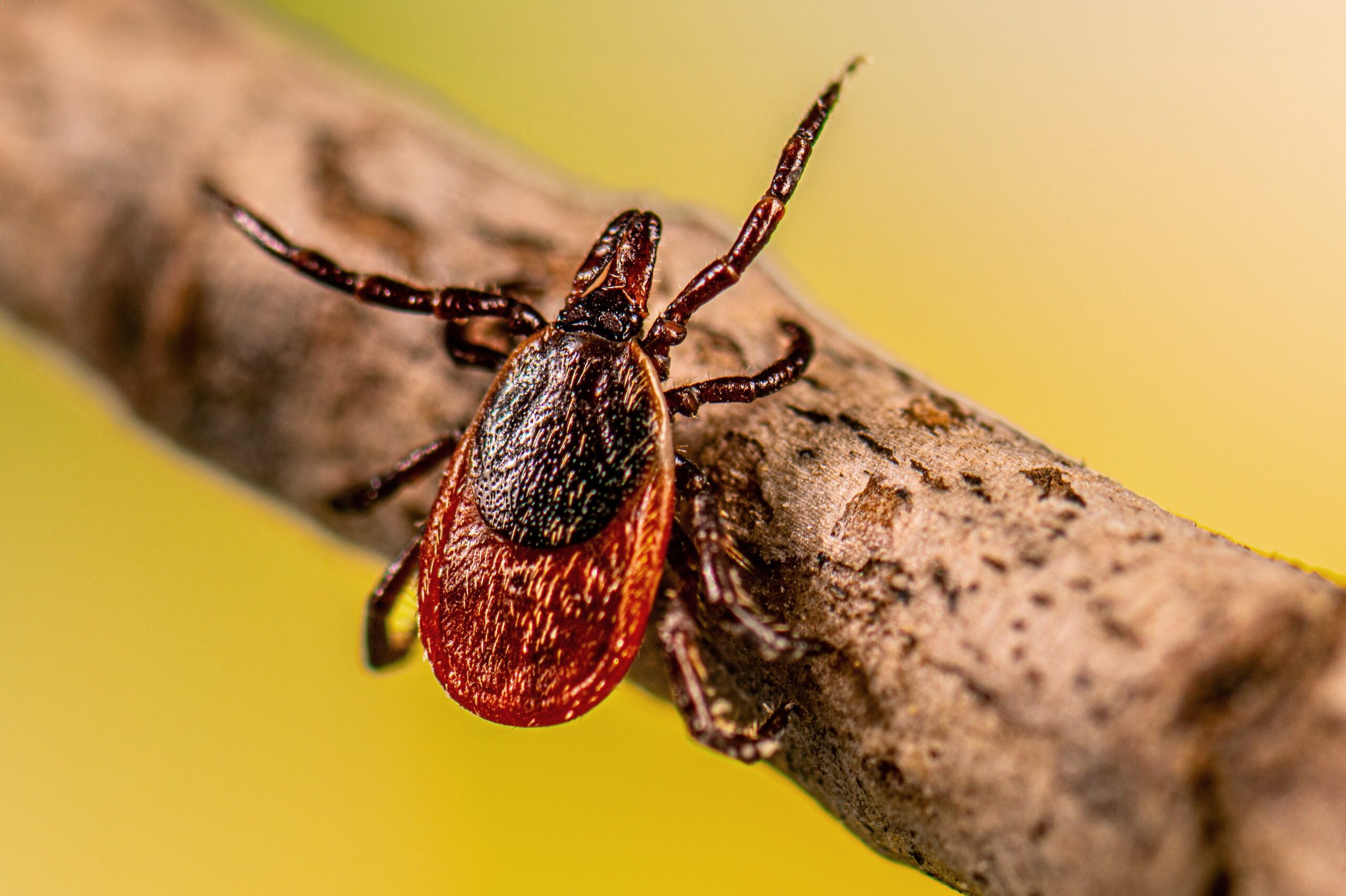
You don’t have to be a full-blown Zoroastrian or Manichaean to notice that good and bad are in constant conflict in this world. In like fashion, so are beauty and ugliness. In neither case is a full and final victory to be expected in the conflict.
As far as evil is concerned, there is a distinction to be made between the natural variety and the man-made kind. No doubt the distinction is not absolutely categorical, insofar as, with proper provision, mankind can protect itself (to some degree) from natural evil such as flood or earthquake. For example, earthquakes of approximately equal size killed tens of thousands of people in Haiti, but very few in Chile. Whether the unpreparedness of the Haitians was the result of evil, properly so called, might be disputed; but certainly, human improvidence played its part.
If there is natural evil, there is also natural ugliness. This was brought home to me vividly in my garden recently. I confess that I was relieving myself far from my house when I heard a rustling in a nearby bush. On closer inspection, it turned out to be a pretty little bird, but one obviously in distress.
I picked it up and it appeared to show no fear of me. Perhaps it was too ill to do so, or (as I liked to think) it was aware of my benevolent intentions towards it. At any rate, I saw that it had a horrible white excrescence on its head, just above one of its eyes. This was a bird tick, an ectoparasite which I presume was the source, perhaps via bacterial infection, that was of the poor bird’s distress and evident weakness.
My reaction was instant love of the bird and equally instant disgust at the tick. My disgust was partly aesthetic and partly moral. What kind of a world is it in which so loathsome a creature as a tick can lay low a creature as beautiful as a small bird? (Here, though I appreciate that a bird can’t help being a bird, and a tick can’t help being a tick, I recalled a line in Chekhov: “A pig’s a pig, you know, it’s not called a pig for nothing.” When I was young, we called a sneakthief or some other lowlife child “a tick,” though I doubt that any of us had ever seen a tick: the tick’s reputation preceded it. Oddly enough, though, when one calls a child “a poor little mite,” it is as a term of affection, though mites are small arachnids like ticks, and by no means always harmless. It is difficult to be entirely consistent.)
We removed the tick from the bird with tweezers and dabbed its head with alcohol. In our garage we had an old bird’s nest, and we put the bird in it for rest and recovery. As the bird was unsteady on its legs (the bacteria carried by a tick can affect the brain) we could not put it high up anywhere in case it fell. Lower down, of course, the bird was in danger of predation by rats or weasels—we used to have a lot of weasels in our loft, because weasels love the fibreglass with which we had insulated it, until our pest controller put down some weasel poison.
Next morning, the bird was gone, though whether dragged off and eaten by a predator or by having taken wing into the dawn we could not say. There was no sign of violence—no blood, no feathers or bits of feathers—so we liked to conclude that we had saved its life and that it had learned that not all humans are bad.
Of course, we did not care what happened to the tick. I cannot imagine that any human being actually likes ticks or feels any warmth towards them, though, as spreaders of disease, they are an important object of biological study. Is there anyone in the world who would have reacted to the tick on the bird by saying, “Poor tick, it also has its rights”?
The tick was an example of natural evil, but also of what might be called natural ugliness. As there is also man-made evil, there is also man-made ugliness, and rather a lot of it. And just as man-made evil fascinates us in a way that goodness rarely does, so some people are attracted to man-made ugliness.
This attraction seems to me to be particularly prevalent in the west. Recently, I read a book by the former President Nicolas Sarkozy of France, who was imprisoned for three weeks in the largest prison in Paris. (I am no great admirer of his, but his book was far better than I had expected.) He noted correctly that the favourite music of the prisoners was rap, a genre that is horrible in sound and all too often vile in sentiment, and that expresses a hatred of the world; it is surely no coincidence, as the Marxists used to put it, that so many rap “artists” end up either murdered or accused of horrible crimes. My repulsion by the ugliness of rap is not mere snobbery or disdain for popular culture: African popular music, Arab popular music, Latin American popular music, Indian and Chinese popular music, share nothing of this deliberate ugliness.
Nor is the cult of ugliness confined to popular music: it infects our “higher” culture, including architecture. The late Frank Gehry, who was so widely idolized, was an almost fanatical worshipper at the shrine of ugliness, and he was far from alone.
I went to an exhibition in London of Lucien Freud’s work. Lucien Freud was an extremely talented man, a brilliant draughtsman (or am I now obliged to say “draughtsperson”?). Yet it was clear that from a young age there was something morbid in his view of the world, a coldness and lack of affection for what he saw or at least wished to convey. One might almost say that he had a cruel eye, which is not quite the same as saying that it was an eye of unsentimental realism, completely without illusion.
Subscribe Today
Get daily emails in your inbox
I am not making a plea for saccharine prettiness (which revolts me in another way). But looking at Lucien Freud’s pictures, I thought of bufones of Velásquez in the Prado, his portraits of the court dwarves of Philip IV (his portrait of a congenital cretin is also memorable).They are not pictures of human loveliness in the conventional sense, quite the reverse, and yet they are beautiful, not only aesthetically but morally. No one who takes notice of them will ever fail to accord full humanity to such dwarves, or for that matter to cretins (I use the word in its strict medical sense). They are a call to love and compassion, in a world far more cruel than our own.
I also thought of Joshua Reynolds’s portraits of Samuel Johnson, in which he is portrayed with all his rough edges, his lack of physical grace, his peculiarities, and quite without the elegance of dress that one associates with society portraits of the kind that Reynolds often painted. Yet even if one did not know that Reynolds revered Johnson (who, incidentally, reciprocated), one would know it from these pictures.
For some reason, our art finds it difficult to express tenderness towards the world, despite the fact that we are in many respects the most fortunate people who have ever lived. It is as if our world contained only ticks and no birds.