Tehran’s Pragmatists Are Still Open to Diplomacy
Iran is pursuing its national interests rationally—and that is the United States’ best hope.
Vice President J.D. Vance recently offered the Islamic Republic of Iran some unsolicited advice: “Stop acting like crazy people.” He contrasted Iranian behavior with American actions, claiming that, “unlike the IRGC, the U.S. never targets civilians in combat.”
“We never will do that,” he added. “We never have done that.”
The latter assertion is unfortunately undercut by the recent deadly strike on a wedding party in Sirik County and the February strike on the Shajareh Tayyebeh girls’ elementary school in Minab, both of which have been credibly reported as American actions. But, arguably worse from the perspective of making peace, the characterization of Iranian leadership as “crazy” is a strategic dead end. The process that will produce a durable peace must recognize that Iran is a rational, albeit ruthless, state actor.
As the American political scientists Vali Nasr and Narges Bajoghli have recently written in Foreign Affairs, we are facing a “new Iran,” forged in the crucible of the wars with the U.S. and Israel, now led by a generation of pragmatic, strategically patient nationalists acting on the basis of a sober assessment of Iran’s capabilities and vulnerabilities.
This is evident from the public demonstrations of the regime’s internal dynamics. In a recent message spread by Tasnim, an IRGC-linked media agency, Supreme Leader Mojtaba Khamenei explicitly criticized “false dichotomies” like “war or negotiation”—a move widely interpreted in Tehran as a thinly veiled dig at Hossein Shariat-Madari, the hardline editor of Kayhan newspaper, which has relentlessly attacked the moderate President Masoud Pezeshkian’s outreach efforts. Khamenei also praised the president as an “honest and caring” individual.
This was a significant statement. By publicly, even if subtly, rebuking the system’s most prominent hawkish mouthpiece, Khamenei signaled that he is not captive to the hardline factions demanding permanent confrontation with the West and especially the U.S. So, far from being “crazy,” Iran’s top leadership is still open to pragmatic solutions.
This is not to say that Iran is not taking a more exacting line against the U.S. than it was before the outbreak of the war and the collapse of the recent ceasefire. From Tehran’s perspective, its current posture is a rational response to a pattern of American behavior. The Islamabad Memorandum of Understanding, which was supposed to be a pathway to deescalation, was from the Iranian point of view another broken American promise. It didn’t bring the hoped-for sanctions relief and unfreezing of assets, despite U.S. commitments under the agreement. The Iranians concluded that their best leverage is control of the Strait of Hormuz, and that relying on American goodwill for economic relief is a fool’s errand.
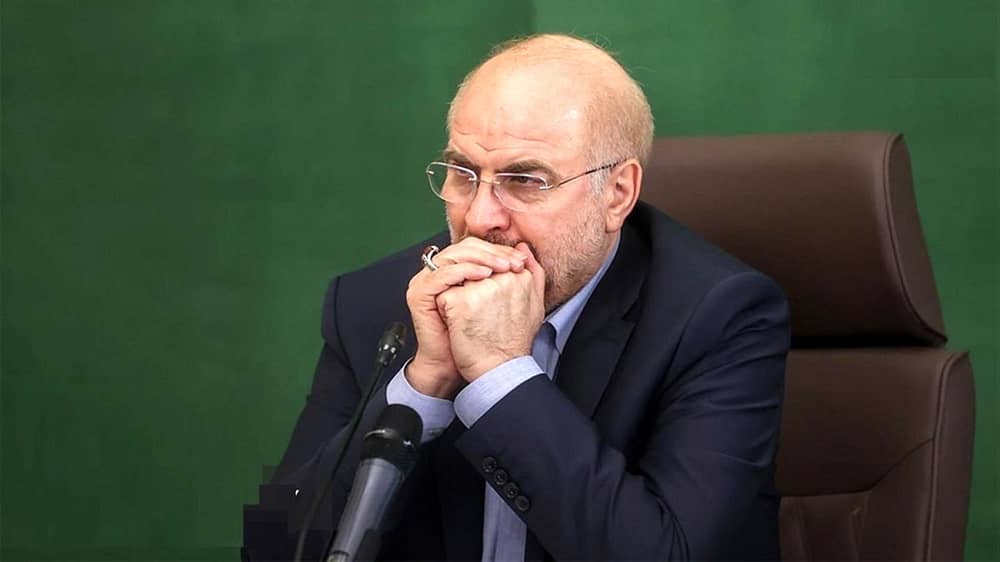
But the regime is even now not entirely closed to diplomacy. Pezeshkian and Parliament Speaker Mohammad Ghalibaf, with whom Vance negotiated in Islamabad, represent a camp that seeks national development, not permanent war. Khamenei’s public support for them and his subtle rebuke of Shariat-Madari reflect a shift toward more pragmatic governance. Khamenei’s Tasnim address was notable for how revolutionary rhetoric is being deemphasized in favor of solving Iran's many economic and social problems.
Subscribe Today
Get daily emails in your inbox
Recognizing the Islamic Republic’s rationality and trying to engage it is probably good politics for Vance. It is unlikely that the vice president can out-hawk Marco Rubio and the rest of the administration’s neoconservatives. He will never be the hawks’ and pro-Israel lobby’s favorite. But he could construct a distinctive role by pushing for peace, especially by supporting a genuine regional diplomatic framework for the Middle East.
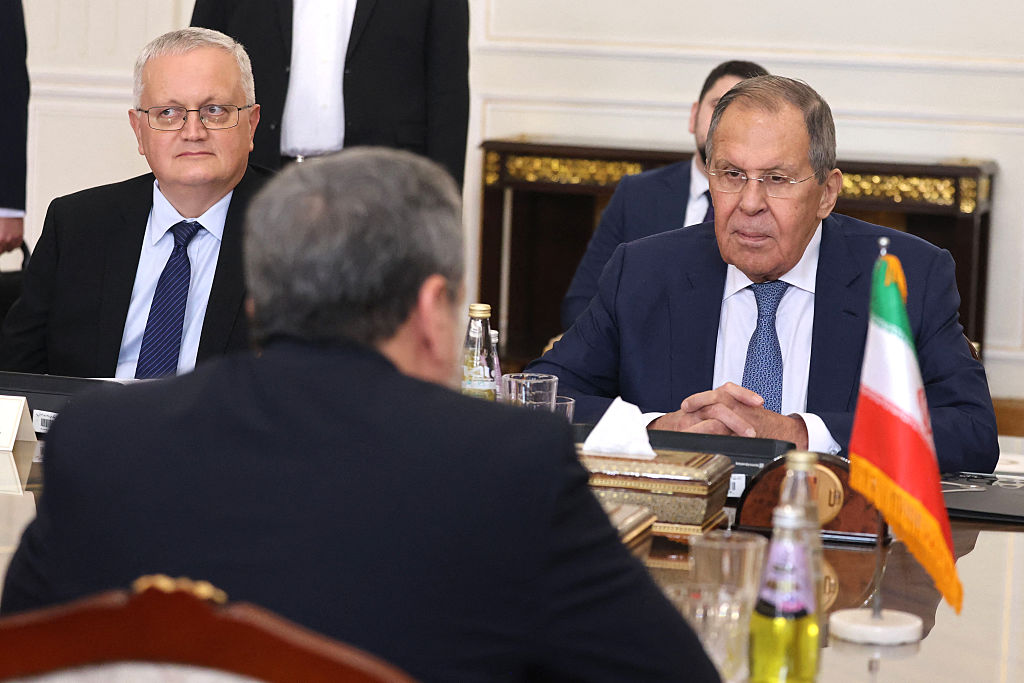
The Mecca Pact signed by Saudi Arabia, Turkey, and Pakistan—a defense agreement Trump has praised—is one such framework. Each of these countries have their channels of communication with Tehran, and some, like Pakistan, have actively mediated to end hostilities. Other regional countries, like Egypt, Qatar, Oman, and UAE, have also pushed for deescalation. The continuation of the war will only bring Iranian retaliation, a bolder Israel, and general destabilization in the region; while these nations all have their own complicated relationships with Iran, they also share an interest in regional stability, freedom of navigation through the Strait of Hormuz, and finding a sustainable modus vivendi with Iran. They cannot afford an endless war.
A multilateral approach is the only viable path forward. The policies of isolating Iran, treating it as a regional pariah, and seeking internal destabilization, ethnic disintegration, and regime change have all failed. Ending the war and extricating the U.S. from this costly (and predictable) quagmire will require treating Tehran as a regional power to be integrated into a shared security framework.
The upcoming UN General Assembly in New York presents a perfect opportunity for Vance to add his weight to the momentum for regional countries to assume greater responsibility for managing their own affairs. The vice president should meet with all these regional stakeholders—including, if possible, Iran—on the sidelines of the UNGA to help lay the groundwork towards a more durable, comprehensive framework in which the Middle Eastern countries take the leading role. It seems as if Iran’s pragmatist faction, led by Pezeshkian and Ghalibaf, and backed by Khamenei’s recent signals, is open for such an engagement.