
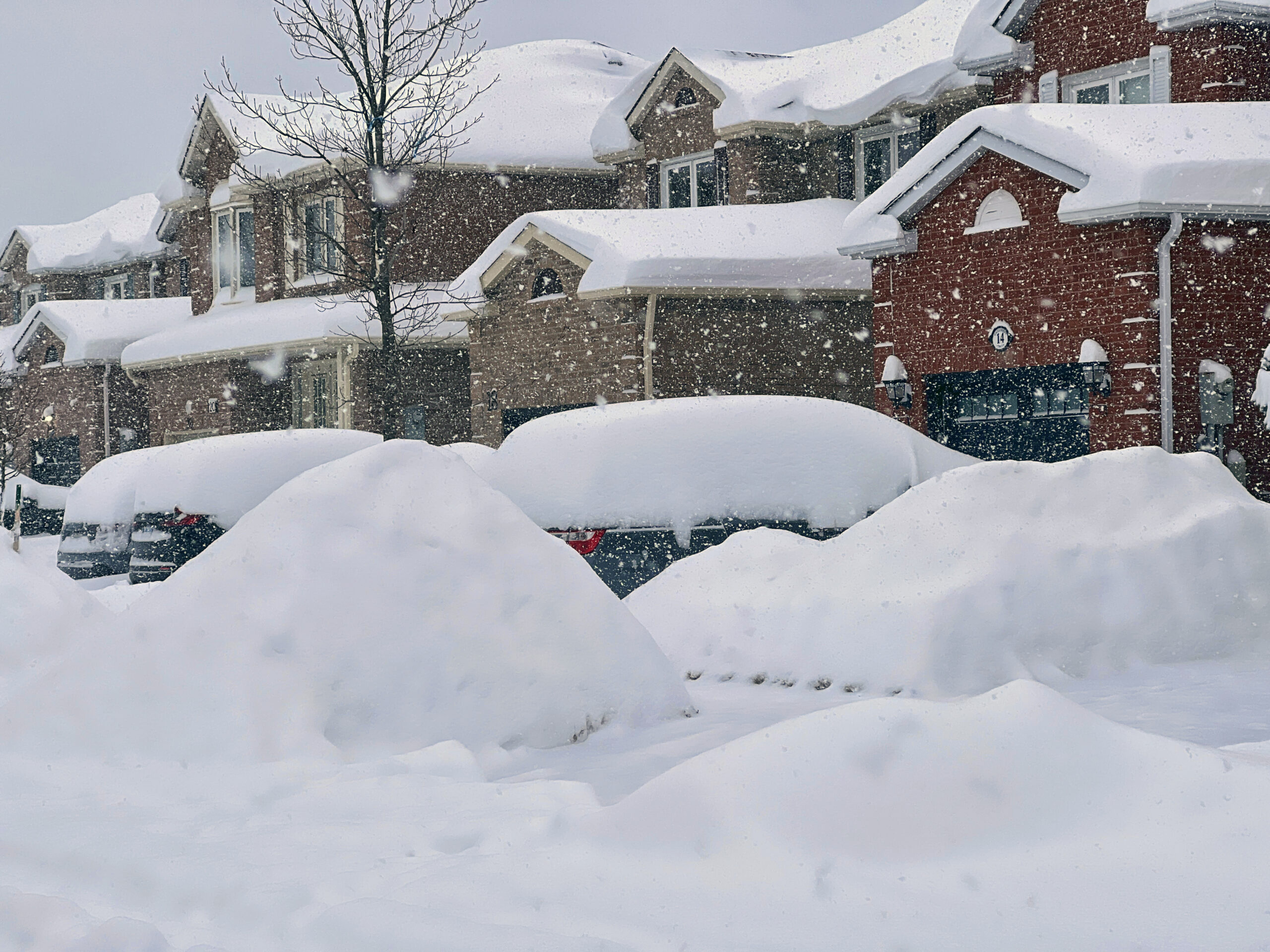

During the winters of my adolescence, the sight of freshly fallen snow was accompanied by an almost-instantaneous realization that it must be removed.
I can easily picture myself watching from a window as the snow accumulated in mounds and blew into drifts before having my reverie torn asunder by the exhortations of my parents. No matter where in the house they were calling from, or what window I was perched beside, their words resonated: “Peter, you need to shovel before the snow gets too deep!” “Peter, how are we going to get the car out of the garage?” “Peter, what happens if someone tries to come to the door?”
My parents, older than most when they had children, were in their fifties and sixties when I was in my teens, and while they did their share of shoveling, they knew not to push themselves too strenuously. I can still hear my father tell my mother (the more eager of the two to prove her physical fitness): “Don’t shovel too much—you have two young, healthy sons to take care of that.” Of course, I now see that it was not at all unreasonable that my parents should expect their fit, robust elder teenage son to take on some snow-removal responsibilities. Yet I concede that I did resent the task, partly because it was so foreign to me—as foreign as snow itself.
Although I was born in Ohio, I spent most of my childhood in a suburb of New Orleans, where extreme weather events took the form of hurricanes but rarely involved winter weather. I have no memory of seeing a proper snowfall until we moved back to Ohio when I was 15 — which, not coincidentally, was my age when it first dawned on me that, while I was officially a writer-in-training, I had involuntarily acquired a new side gig: snow-shoveler in chief for the Tonguette household.
The signs were there when, having just moved into our new house in Ohio during the wintry December of 1998, we trekked to the downtown department store then known as Lazarus (later incorporated, in the same depressing manner of Warner Bros. and Netflix, into Macy’s). I had a bad feeling when my parents bought my brother and me all manner of winter wear: heavy coats, thick gloves, tough boots. Since I was not naturally outdoorsy or likely to take up cross-country skiing, this gear, I knew, could only be for one purpose: to survive the elements while in the process of removing snow from our property.
Given my resistance to this chore, that I retained any fondness for snow is something of a miracle, but I did. Years of being homeschooled had turned me into a homebody, and my already-stated vocation of choice — writer—did nothing but encourage my instinct for cocooning. From where I sat, fallen snow provided a cozy layer of insulation between me and the big, bad world. I merely disliked being tapped to perform the physical labor involved in its removal.
Yet, as adulthood and homeownership descended upon me, I found that I resisted snow-shoveling less and less each winter. I even reached a point when I began to enjoy it. Honestly, I should be featured on one of those Progressive insurance commercials about young people who have, Invasion of the Body Snatchers-style, “become their parents.”
Subscribe Today
Get daily emails in your inbox
For me, the newfound pleasure I have found in removing snow is similar to the satisfaction I take in performing any quickly executable task, like vacuuming a rug: there is instant gratification in seeing something go from messy to spiffy so quickly. As I slide the shovel up and down my driveway, I see, instantaneously, the fruits of my labors: portions of the asphalt freshly liberated from accumulated snow. Thus encouraged, I continue until the entire driveway is clear. How many problems in life can be solved so easily? Being a night owl, I sometimes put on my snow gear past midnight just for the fun of being the first on my block to make a dent in the drifts. And not being a morning person, such preemptive snow removal reduces the possibility that I will have to perform the task half-awake and bleary-eyed.
If I am shoveling during an active snowfall, I shovel with the full knowledge that the sections I have cleared will have to be cleared again, but this does not depress as much as inspires me to keep at it. Perhaps I have simply reached a stoic state of acceptance about snow and the necessity of its prompt, indeed ongoing removal—like Seneca with a shovel.
I do not think that my parents were trying to impart a philosophical lesson when they ordered me to start shoveling so many winters ago. They were just trying to make the driveway useable. But their constant calls to bundle up and start shoveling do amount to kind of ersatz value system: As surely as the snow will fall every Ohio winter, the world will keep dumping its problems on us. We can either ignore, or shovel our way out.