Japanese PM’s China Hawkism Garners Diminishing Support
Sanae Takaichi’s foreign policy might be too bold even for the Trump administration.
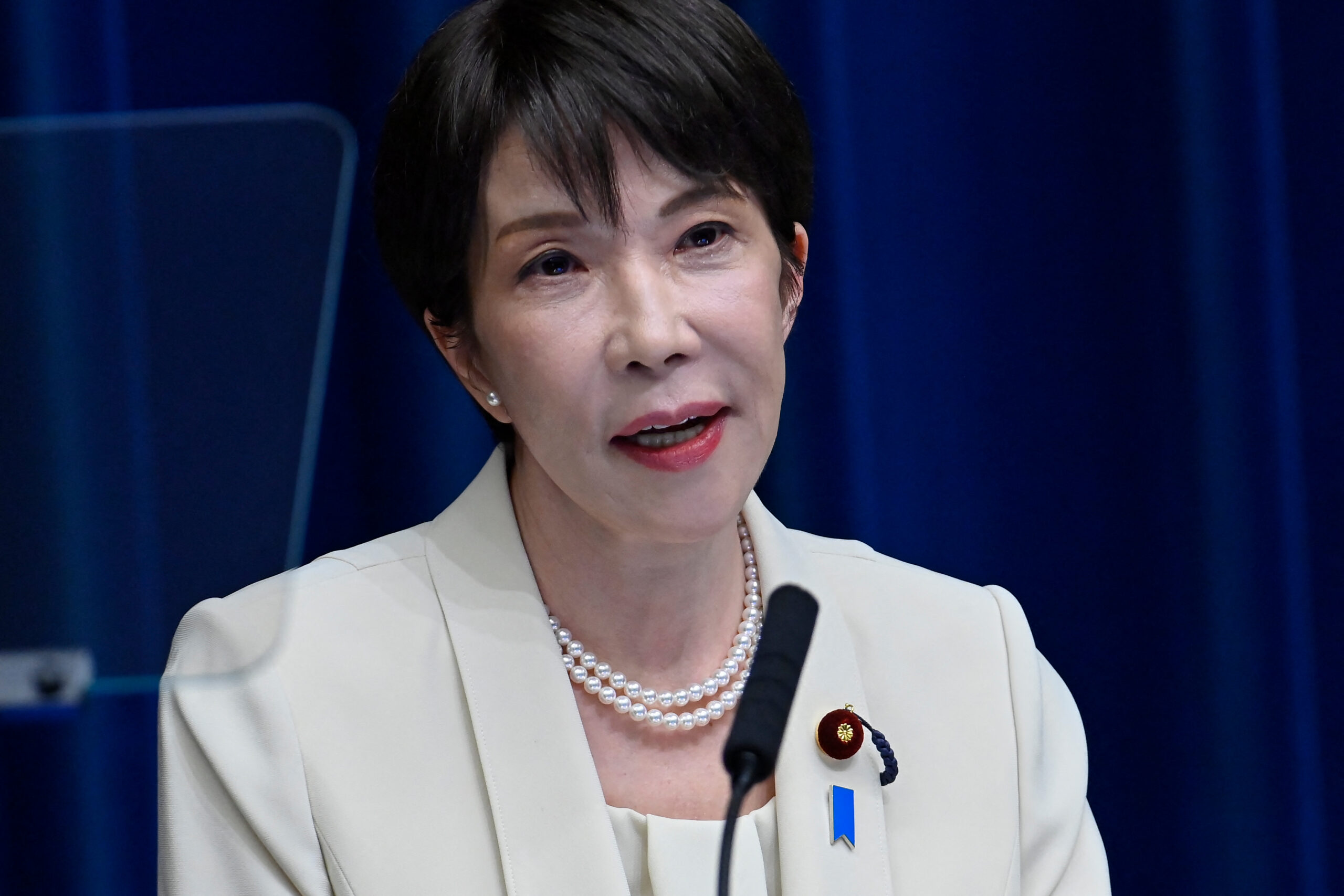
There is little doubt that Japan’s prime minister, Sanae Takaichi, wants her country to play a more active and assertive role in regional security affairs. She also favors adopting a more hardline posture toward the People’s Republic of China (PRC). A key question remains, however: whether international allies, Japan’s political elite, and a majority of the Japanese public are willing to follow that course. Recent developments suggest that support for Takaichi’s China hawkism is beginning to wane.
Although she had been in office for only a few months, Takaichi gambled by calling a snap election for early February 2026. The daring move proved to be a spectacular success for her personally and for the governing Liberal Democratic Party. The LDP and its small coalition partner won more than two-thirds of the seats in the lower house of parliament, ending a multi-year period in which it habitually governed as part of shaky political coalitions. Instead, Takaichi now had a comfortable margin of support.
Takaichi’s electoral gambit occurred after she took high-profile positions in favor of standing up to the PRC and advocating a strong Japanese commitment to preserving Taiwan’s security and de facto independence. The February election landslide was widely interpreted as a popular mandate for her foreign policy. As the Wall Street Journal noted, the scale of Takaichi’s win suggested that voters especially approved of “her handling of China, which has heaped pressure on Japan over remarks she made about Taiwan.”
Since then, the prime minister has sought to stake Tokyo’s reputation on the adoption of a more vigorous security role. One important move was a proposal to establish an independent intelligence agency, reducing dependence on information from the United States. The Washington Post noted that, “in a major break from historical taboos linking intelligence-gathering to wartime activities, the Japanese government is looking to undertake systematic spying of its own, overhauling its intelligence capabilities for the first time since World War II.” In addition to that step, Takaichi’s government has also increased the nation’s defense budget and lifted the ban on lethal arms exports.
The end of the arms export ban in April 2026 was especially controversial. The prohibition policy had been in effect since the end of World War II, and many Japanese considered it an essential component of Tokyo’s officially pacifist foreign policy. Even though some restrictions on exports remain in force, the mere fact that Japan entered the arms-export business marked a major symbolic as well as substantive change in its foreign policy.
However, the prime minister’s hawkishness has attracted growing domestic criticism. Even early in her tenure, there were signs of discontent among more cautious and pragmatic LDP leaders.
During a debate in the Diet, she ignored a longstanding warning from Beijing. Asked repeatedly about a hypothetical Taiwan security contingency, Takaichi stated that a military confrontation over the island would constitute a “survival-threatening situation” for Japan, a deliberate invocation of the Japanese constitution’s “collective self-defense” clause that would permit direct military intervention. That stance went significantly beyond Tokyo’s traditional position that its military forces exist solely for national self-defense and to fulfill treaty obligations. It was noticeable that other Japanese officials, including Foreign Minister Toshimitsu Motegi, immediately sought to clarify (i.e. soften) the prime minister’s comments regarding Taiwan.
Takaichi is bleeding support among the Japanese public. A poll published in Japan’s Asahi newspaper two weeks ago showed that Takaichi’s support had slipped 7 percentage points in the previous month and that her disapproval figure had risen to 35 percent from 27 percent. Another Japanese paper, Mainichi, released a survey last week that showed her support plunging 10 percentage points over the same period to 41 percent.
The South China Morning Post—a Hong Kong-based English-language newspaper blocked in mainland China but sometimes accused of promoting Chinese soft power—concluded that this decline in Takaichi’s favorability is significant, since it put her approval rating below the 50 percent mark for the first time since her initial election as prime minister in October 2025.
Moreover, Japan’s business leaders appear increasingly nervous about Takaichi’s worsening relations with China and the possible negative impact on bilateral trade.
Subscribe Today
Get daily emails in your inbox
Beyond the issue of trade, there are ample reasons to be concerned about deteriorating relations between Japan and the PRC. Coast Guard vessels from the two countries have clashed near the Senkaku Islands—which Tokyo and Beijing both claim as their own—several times since Takaichi took office. The latest episode was an especially ugly incident in early July. Instead of seeking ways to reduce tensions, though, the current Japanese government appears more determined than ever to vindicate Tokyo’s claim to the disputed territory.
Takaichi’s commitment to a larger defense budget and a firmer policy toward Beijing should logically strengthen her relationship with President Donald Trump and the rest of his administration. That has generally been the case, but there also have been a few rough patches. Trade disputes between the two countries have not eased substantially. Trump also managed to make a clumsy, utterly inappropriate remark about the Pearl Harbor attack during his summit meeting with the Japanese leader in late March 2026.
Ironically, Takaichi’s policy toward Taiwan might be more uncompromising than even Trump would prefer. His administration has lowered the temperature on U.S.–China tensions and sought help from Beijing in getting Iran to reopen the Strait of Hormuz. If U.S. policy regarding Japan’s overall new foreign policy orientation turns wobbly, Takaichi might discover that she no longer has a mandate for her hardline strategy either domestically or from Tokyo’s most important ally.