Iran War Enters 30th Day: Pentagon Prepares Ground Operations
The Iran War entered its 30th day on Sunday amid expectations of a coming U.S. ground operation.
The Washington Post reported Saturday that the Pentagon is preparing for “weeks of ground operations in Iran,” with plans that could involve “raids by a mixture of Special Operations forces and conventional infantry troops.”
Iran’s Tasnim News Agency reported Sunday thatMohammad Ghalibaf, the speaker of the Iranian parliament, warned any U.S. ground invasion would bring “severe punishment” for American forces and their regional allies. He observed Washington was simultaneously pursuing plans for a ground invasion while publicly signaling interest in negotiations. The Iranian government has conveyed skepticism that the Trump administration wants to negotiate in good faith.
In response to reported U.S.–Israeli airstrikes that damaged Tehran’s University of Science and Technology and another Iranian university, the Islamic Revolutionary Guard Corps warned Sunday that U.S. universities in the Gulf could face retaliation unless Washington “condemn[s] the bombing of the universities” by noon Monday Tehran time. The IRGC advised employees, professors, and students to remain at least one kilometer from American campuses in the region.
Iran struck major aluminium facilities in Bahrain and the UAE on Saturday, injuring two workers at Aluminium Bahrain and causing significant damage at Emirates Global Aluminium’s Al Taweelah smelter. The parent company of Bahrain Steel declared force majeure on Saturday due to disruption caused by the war.
U.S.–Israeli strikes hit Iranian water infrastructure on Saturday, with Fars reporting a strike on a 10,000-cubic-meter reservoir in Haftkel, Khuzestan, while images from Tehran suggest Israel also destroyed Tehran’s Natural Resources and Watershed Management Organization, the civilian agency overseeing the capital’s water and environmental systems.
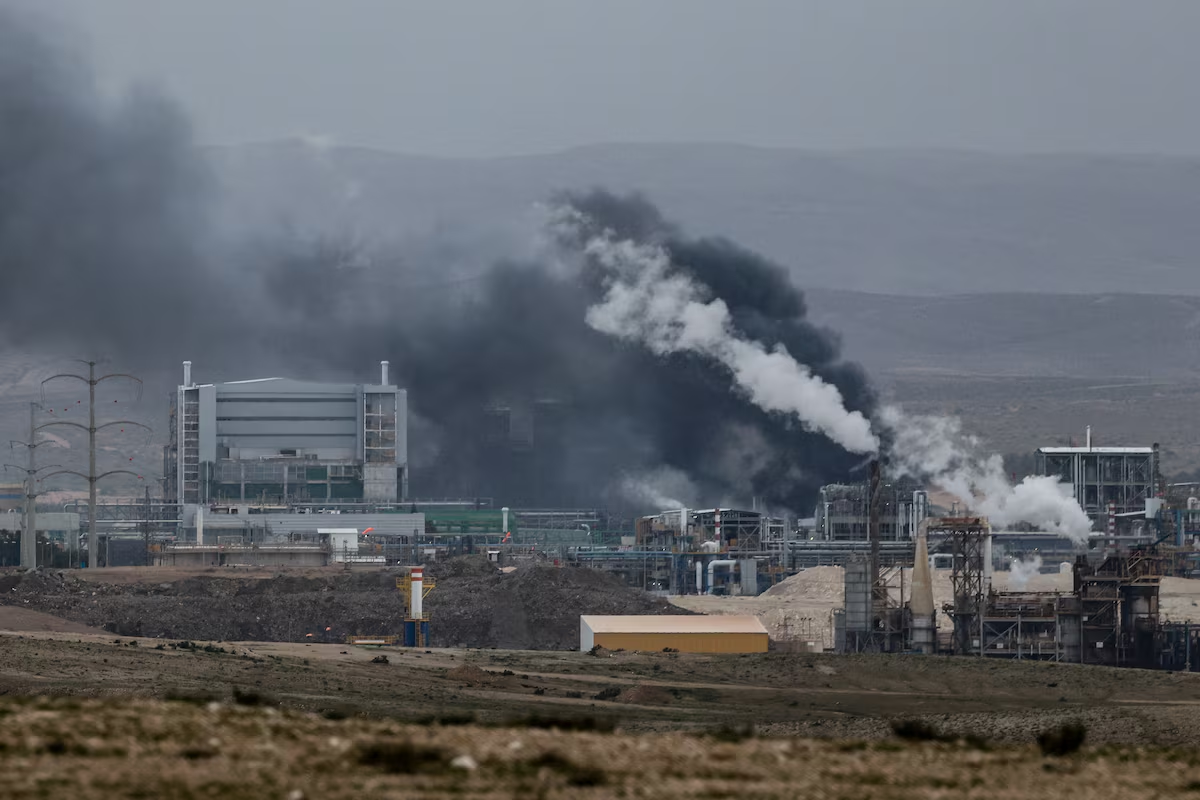
A hazardous fire erupted Sunday morning at Israel’s Neot Hovav industrial zone south of Beersheba as Iran responded to Israeli strikes. Israeli Channel 12 warned of “hazardous materials as a result of interception fragments hitting a gas pipeline,” due to the Iranian strikes.
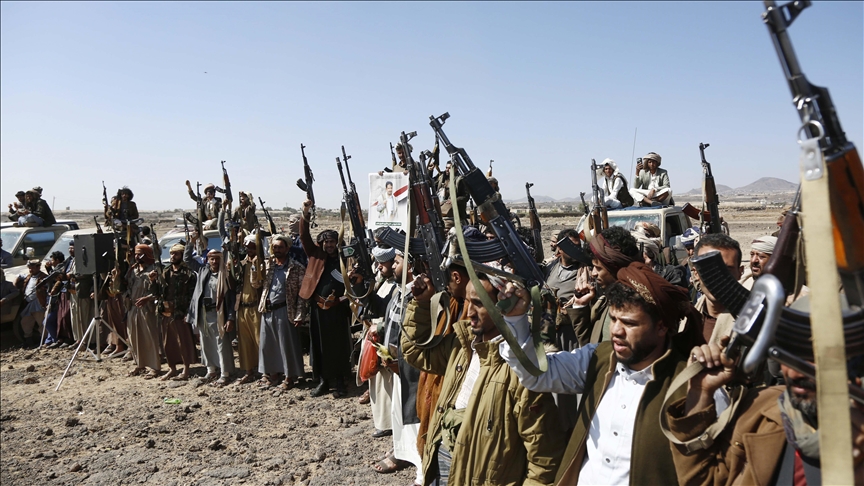
After joining the war on Saturday morning, Yemen’s Houthi movement launched a second wave of attacks at Israeli targets overnight. Al Jazeera reported Saturday the Houthis are preparing a three-phase escalation involving: “continuous attacks” on Israeli military targets until Israel halts strikes on Iran; a blockade on all “Israeli-linked” goods transiting the Bab el-Mandeb Strait; and, if the U.S. attacks the Houthis directly, strikes on U.S. military bases.
Subscribe Today
Get daily emails in your inbox
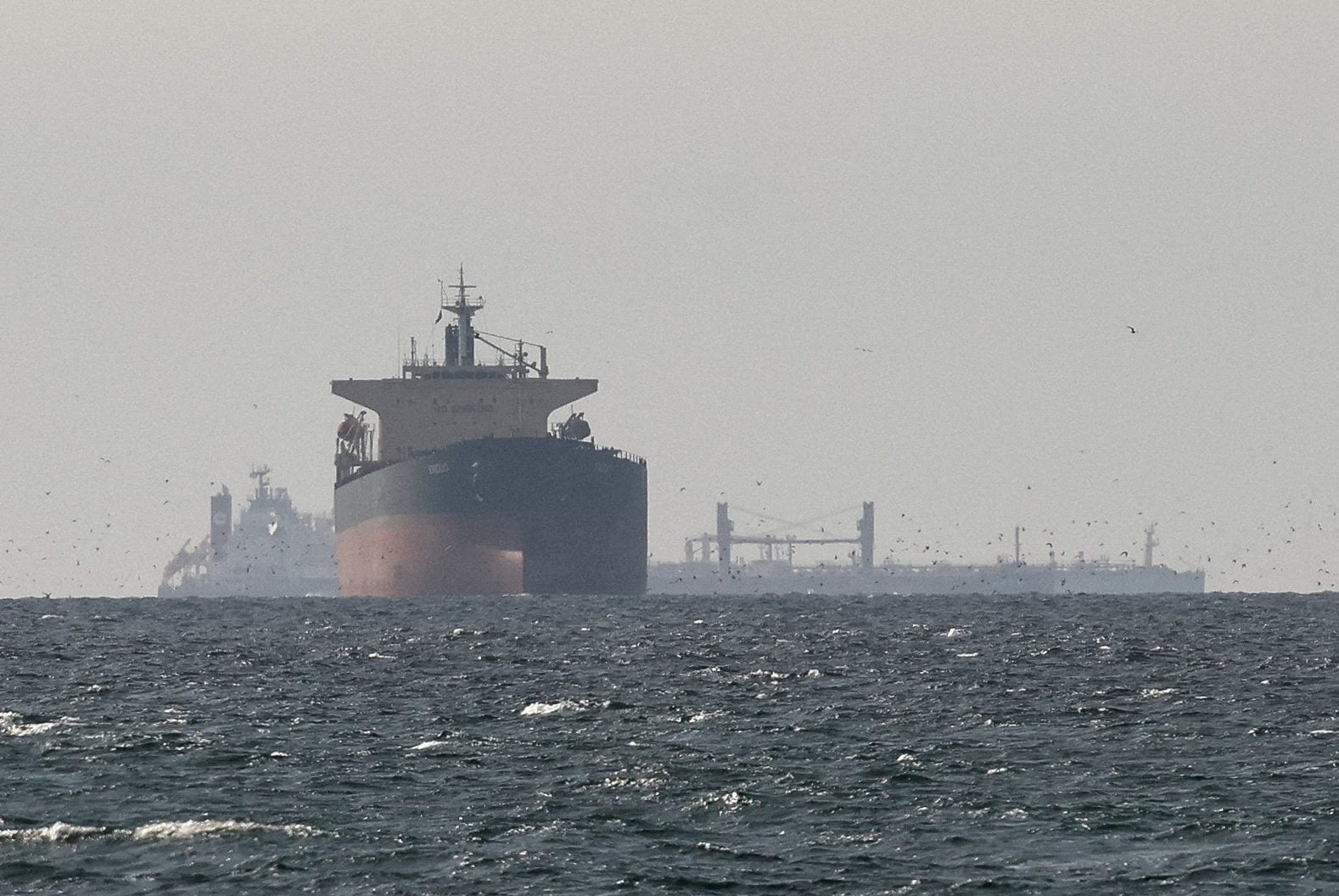
Pakistan’s Foreign Minister Ishaq Dar said on Saturday that an agreement has been reached with Iran to allow 20 more Pakistani ships through Hormuz. Lloyd’s List reports that energy traffic through the Strait of Hormuz remains severely constrained, with mainstream tanker movements still reduced to a trickle compared to the more than 100 vessels which transited the strait each day before the U.S. and Israel launched the war. Maritime tracking data shows that an average of two vessels per day have been permitted to cross the Strait of Hormuz since the war began.
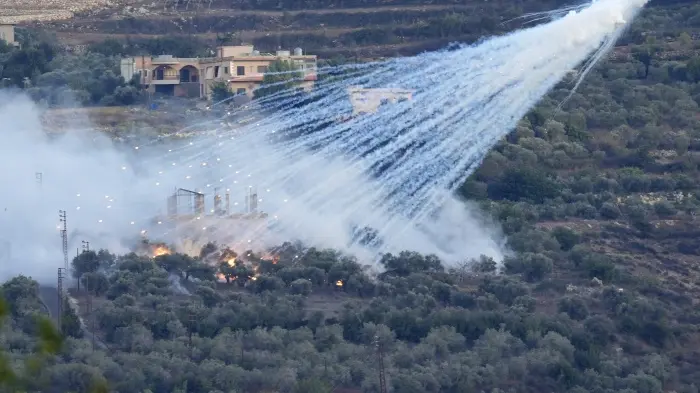
In Lebanon, more than 1,000 people have been killed and nearly one-fifth of the population displaced in just two weeks, according to government figures cited by the United Nations Office for the Coordination of Humanitarian Affairs (OCHA), with intensified Israeli operations hitting areas south of the Litani River and Beirut’s southern suburbs.
The Islamic Health Committee, a Lebanese institution, reported that an overnight Israeli airstrike hit an ambulance in southern Lebanon, killing a paramedic. OCHA said that between March 2 and 25, Israeli strikes forced at least 50 primary health care centers and five hospitals to shut down, killing at least 53 medical workers and wounding 91 more on duty.