Europe’s Establishment Is Embracing War—and Losing Voters
It falls to alternative parties like Germany’s AfD to push for peace.
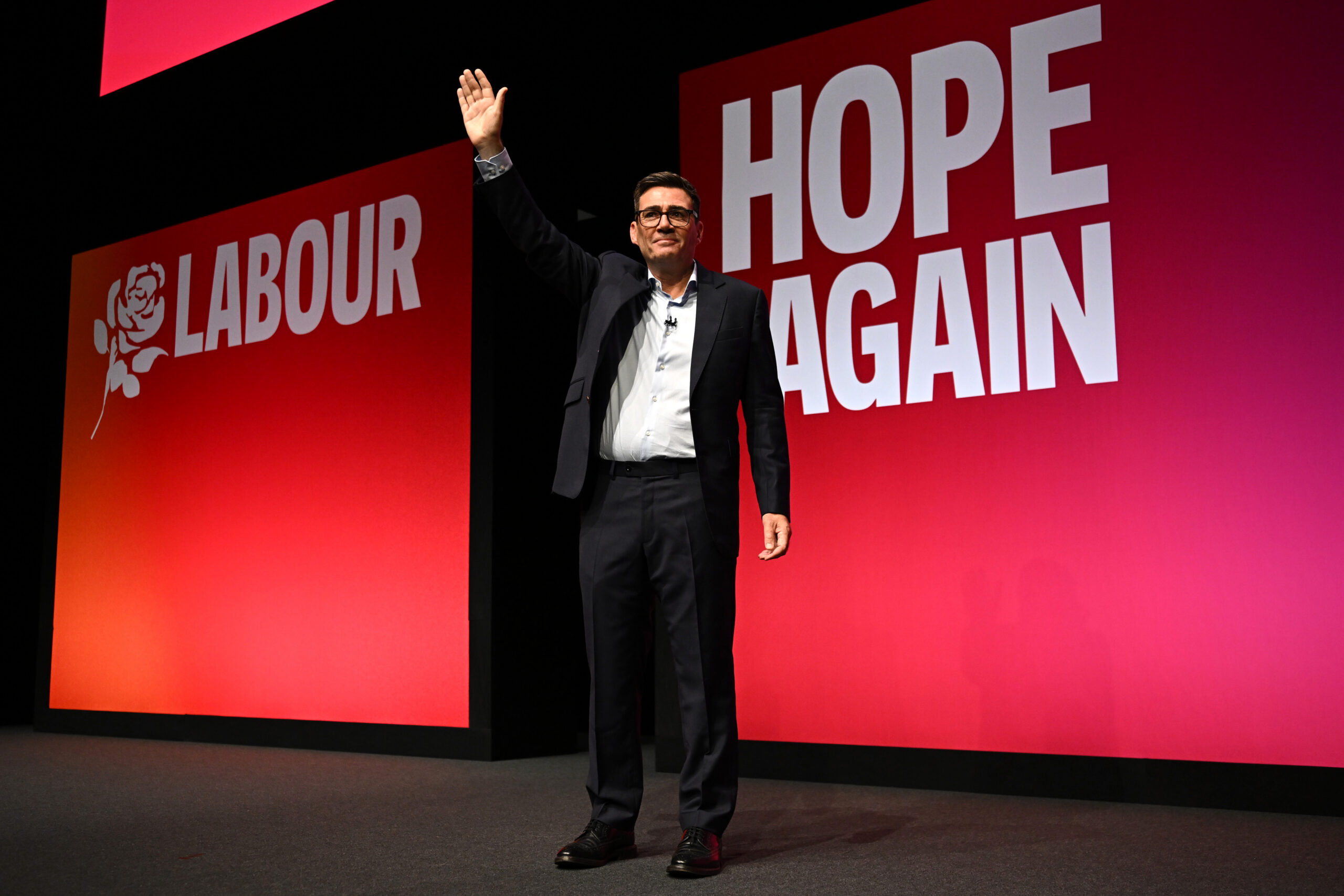
Britain’s Labour Party is not traditionally thought of as a bastion of militarism or authoritarianism. Yet listening to some of what its top figures have been saying recently might cause one to doubt the conventional wisdom on that.
Consider what Labour Party strategist Paul Richards said in a GB News interview earlier this month. Asked how the UK might respond to an increased Russian threat, Richards—who has worked for two Labour governments—gave a disturbing answer. “We’d have to lock some people up,” he said, “some of the pro-Russian voices, people who say there isn’t a threat, [and say] ‘Don’t fight for your country, don’t go to war for Burnham.’”
His comments are not a one-off. They reflect a worrying trend among Britain’s political mainstream—the old parties, media, and think tanks—which has increasingly adopted a siege mentality informed by the far-fetched expectation of imminent war with Russia.
Nor is the trend restricted to Britain. It spans the entire Western world. And it helps explain why the centrist political forces previously seen as “reasonable” are losing ground to the supposed “fringe.” Apocalyptic millenarianism is no longer the domain of radical obscurantists, but of people like NATO’s secretary-general Mark Rutte, who in 2025 seemed to foretell with relish a conflict between Europe and Russia on the scale of the SecondWorld War. “Imagine it,” he said, “a conflict reaching every home, every workplace, destruction, mass mobilisation, millions displaced, widespread suffering and extreme losses.”
It is politicians branded as far right or far left radicals who, surprisingly, have emerged as the main opposition to this unhinged bellicosity.
What’s largely prompting this trend is the very logic of the liberals competing with the populists. Western societies display a demand for performative “toughness,” which caters both to the infantilism of their political classes and the gamification of war in faroff countries.
Things seem to have begun in earnest in 2016, when the prospect of liberals losing to rivals like Donald Trump led the former to embrace conspiracy theories like Russiagate and double down on foreign policy hawkishness as a way of evading responsibility for their own failures. Putin’s invasion of Ukraine served a similar function, providing a theater for “toughness” even as the West has gotten bogged down in what has increasingly turned into a proxy conflict.
Trying to outdo the populists along a different axis, rather than doing the hard work of opposing them with value-based positions, has led the centrists into a trap. It left a vacuum in the center, into which the populists—ever alert to political opportunities—have deftly stepped.
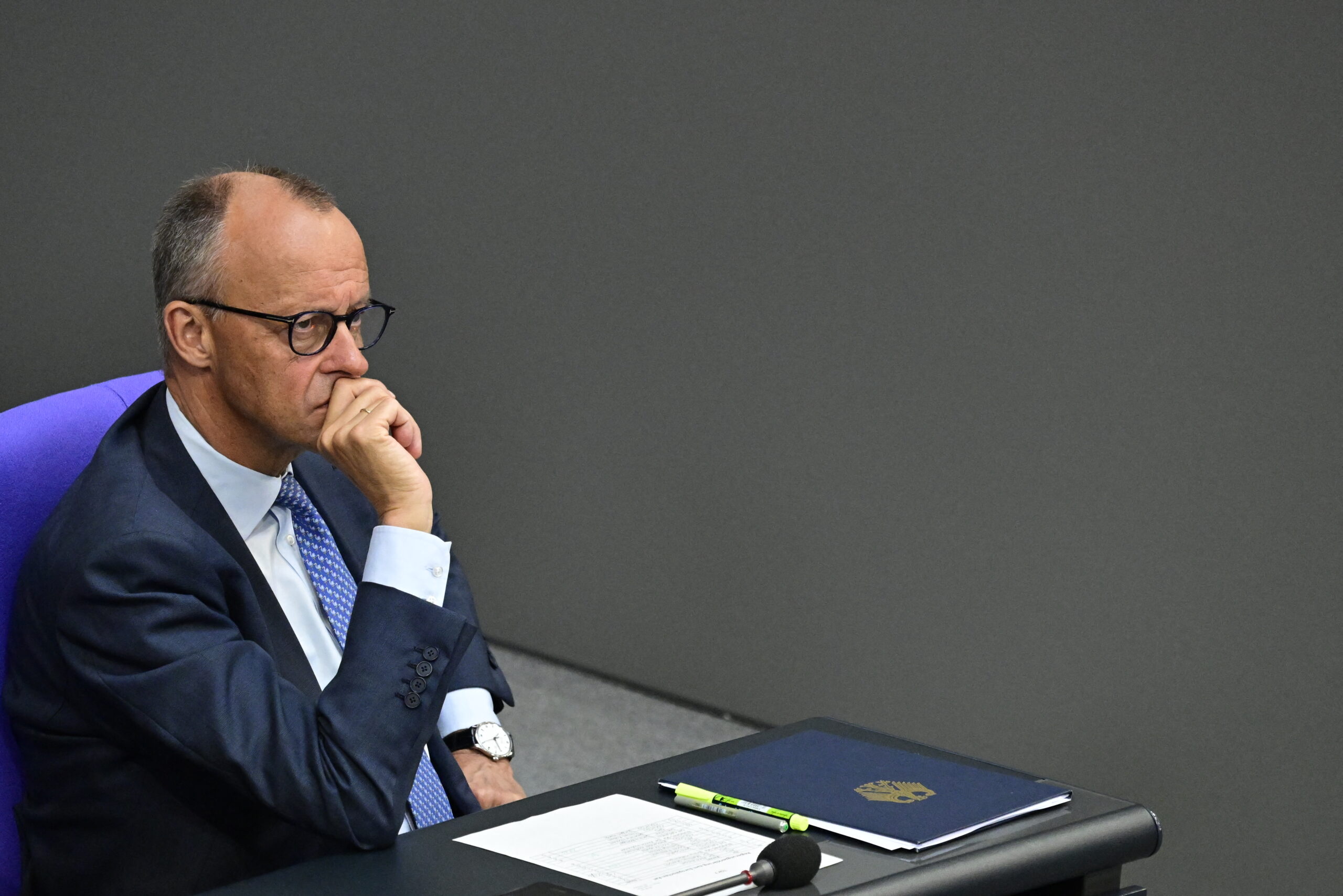
Here is how it plays out in Germany. When the Christian Democratic Union (CDU) suffered an embarrassing defeat in Saxony-Anhalt earlier this month, the party’s leader and premier in North Rhine-Westphalia, Hendrik Wüst, said the government should consider banning the AfD (which won the election by a landslide). Wüst is eyed as a potential replacement for the unpopular chancellor Friedrich Merz.
The CDU went on to suffer additional defeats in Mecklenburg-Western Pomerania and in Berlin. The former is particularly symbolic, because this is where the Nord Stream gas pipelines make landfall—a fact that makes this state a direct beneficiary of the German-Russian joint venture to supply cheap Russian gas to the German economy.
When Nord Stream 2 was blown up in September 2022, the immediate consensus in the West was that Moscow was responsible. Yet the culprits turned out not to be Russian, but Ukrainian. German police investigators eventually charged individuals associated with Ukraine’s military intelligence service for the attack. (It’s worth noting that this Ukrainian spy agency was rebuilt in 2015 with considerable assistance from America’s CIA.)
Germany’s rejection of Russian gas supplies after Putin’s all-out invasion in Ukraine can be seen as a noble gesture, perhaps, but it had dire consequences for the country’s economy, which contracted in 2023 and 2024 before showing anemic growth in 2025. Even more importantly, it hit every household in Germany with skyrocketing heating and power bills. Interestingly, Germany wasn’t receiving Russian gas at the time of the explosion, which means the attack was aimed at preventing the resumption of supplies after the end of war rather than interrupting ongoing exports.
The German government has never properly addressed the issue at the federal level. On the eve of September elections, Merz’s sharp reaction to the Leipzig drone incident, which he instantly blamed on Russia, contrasted sharply with the virtual absence of a response to the perpetrators of the Nord Stream attack.
Voters in Mecklenburg-West Pomerania slaughtered Merz’s party, excluding it entirely from the state’s legislature for the first time in nearly 80 years. The big winner was the AfD—a party unafraid to ask questions about Nord Stream and which muses about restoring gas supplies after the Ukraine War ends. Voters also largely spared the Social Democrats, under whose leadership Nord Stream was built in the first place (although they had to disown it after Russia’s invasion).
The early days of tension between post-Soviet Russia and the West, which culminated in the war in Ukraine, were marked by squabbles over pipeline projects delivering gas to Europe (remember South Stream or Nabucco?). The unyielding opposition of centrist politicians to such projects has led voters to wonder whether their political establishment is more interested in catering to armsmakers and shale gas producers than in providing for its citizens. It’s hard to think of a better illustration of NATO’s unofficial mission to “keep the Germans down and the Russians out” than the fate of Nord Stream.
The perception of abandonment is what fuels the popularity of the AfD’s sovereigntist stance. And despite accusations of extremism, it is the AfD who sounds the most moderate and reasonable on the vital issues of war and peace.
Indeed, their foreign policy stance provides AfD leaders with one bulletproof rebuttal to accusations of fascism. A defining component of the fascist ideology is aggressive militarism—a trait exhibited by the German political establishment, not its hard-right challengers. The AfD fills the shoes of the old-school left-wing peaceniks when it comes to Ukraine, while the Merz government staunchly supports further escalation while discreetly undermining Trump’s efforts to bring the conflict to a close. The AfD also condemns the war on Iran (which Merz initially supported, before making a U-turn under public pressure).
(Ex-)centrists also advocate an enormous defense spending hike Germany can ill afford, as well as compulsory military service (this latter move has sparked youth protests across the country). The way mainstream German politicians are courting the far right in Ukraine—members of Azov movement prominently featured at the prestigious Munich Security Conference this year, for example—make the charges of nazism levelled against the AfD look especially lame.
Opposing Russia’s full-scale invasion of Ukraine, which the AfD does, is one thing. Supporting an endless proxy war with a nuclear-armed great power—and committing to fight this “to the last Ukrainian”—is quite another.
Subscribe Today
Get daily emails in your inbox
And the polls suggest German voters have little appetite for risking their country’s future in such a gambit.
The AfD and other insurgent parties thrive when their opponents lean into hawkishness and authoritarianism, but so far there is little evidence the establishment understands this. Indeed, European political elites are doubling down. They recently invited Zelensky’s former press secretary, Iulia Mendel, to speak in front of the European Parliament. But Mendel is a vocal critic of her former boss, and so the parliament’s centrist leadership banned her from entering after Zelensky’s government imposed sanctions on her (an extrajudicial punishment he is routinely applying to political rivals). By banning Mendel from speaking and turning a blind eye on Zelensky’s abuse of power, the center once again chooses delusion and bellicosity over a genuine commitment to democracy.
Meanwhile, alternatives like the AfD will continue to fill the vacant space left in the middle of the political spectrum.