British Energy Policy’s Suicidal Empathy
The UK could be an energy superpower. Why isn’t it?
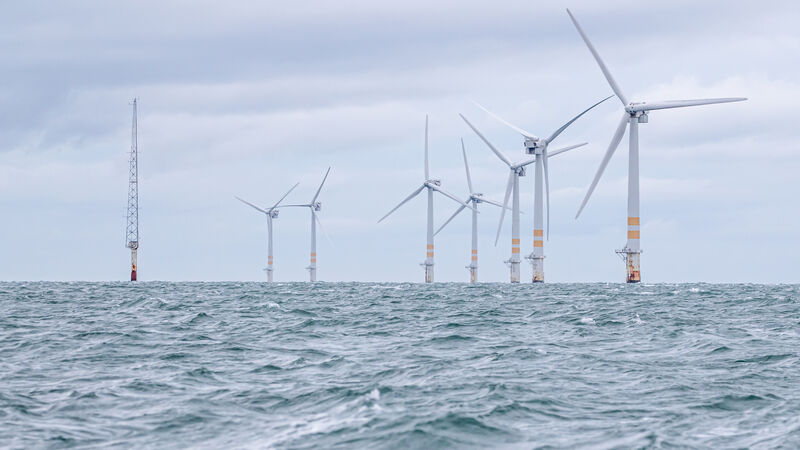
Great Britain should be a virtual energy superpower. It is an island with prodigious reserves of energy, both carbon-based and renewable.
The North Sea oil and gas fields may be in decline, but there are still around 14 billion barrels of the black stuff lurking under the waves, and new discoveries are being made every year.
Windy Britain also boasts 42 percent of Europe’s offshore wind capacity. And of course the UK is sitting on vast reserves of shale and the coal which made this country the cradle of the Industrial Revolution.
So with all this energy, why are British manufacturers collapsing under the weight of electricity prices up to four times higher than those of their U.S. competitors? Why are domestic energy bills among the highest in Europe, plunging hundreds of thousands of British families into fuel poverty? Home heating bills are still nearly 50 percent higher than before the Ukraine war price spike.
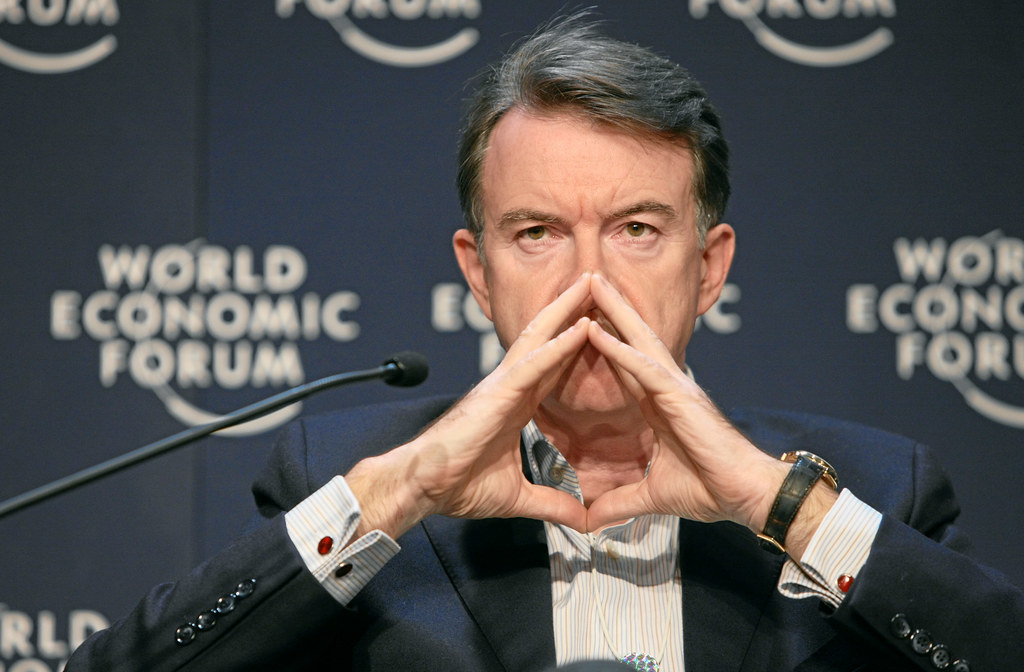
Step forward, Secretary of State for Energy Security and Net Zero Ed Miliband. A former Labour Party leader, this scion of socialism is now a crusader for green energy and determined to end Britain’s dependency on fossil fuels, even if it means destroying Britain’s economy in the process.
Labour has banned drilling in the North Sea and slapped a punitive 78 percent windfall tax on oil and gas profits. As a result, energy companies are packing up. The Aberdeen and Grampian Chamber of Commerce, the center of Britain’s oil and gas industry, estimates that a thousand jobs a month are being lost.
Yet, perversely, Britain is currently importing, at great expense, gas and oil from Norway which has been extracted from the very same North Sea the UK has shunned. Norway is often portrayed as an environmentalist icon. But the Nordics were never stupid enough to stop extracting oil and gas. They are even drilling in the Arctic.
Last year, the UK closed Scotland’s last oil refinery, Grangemouth in Fife. It will be turned into a receiving depot for liquefied natural gas (LNG) imported from abroad. Nothing could better illustrate the reckless idiocy of British energy policy. The UK has persuaded itself that it is preferable to import oil and gas from abroad instead of developing its own reserves.
But this is not only more expensive for the public purse; it is also more damaging to the environment. This is because of the emissions from the tankers bringing LNG, sometimes thousands of miles, from the U.S. and the Middle East.
As for wind, Miliband has just locked Britain into a 20-year deal with renewable companies to deliver wind energy at a guaranteed price of $124 per MWh. That is around twice the cost of wholesale electricity in the U.S.
But Miliband is unconcerned. He says wind power will eventually be cheaper, watt for watt, than fossil fuels. Green energy will deliver many good jobs in the future—though precious few have emerged so far. Anyway, Britain has a responsibility to save the planet from climate chaos.
But does it? Britain contributes little more than 1 percent of global CO₂ emissions. It is already a world leader in emissions reduction, having halved its baseline 1990 emissions. Meanwhile, China is opening new coal-fired power stations every week, and India is building its economic boom largely on coal.
And it is not as if Britain can do without fossil fuels. Seventy-five percent of the country’s energy use is still based on oil and gas. This is not going to change any time soon. Transport, construction and agriculture are still largely dependent on fossil fuels. The National Health Service could not function without them in the form of pharmaceuticals and plastics.
Renewable energy is a goal worth working towards. Wind energy produces less pollution, obviously, and fossil fuels are a finite resource. The wind will never run out, nor will the sun—though there is not a great deal of it in Britain.
But wind energy isn’t cheap. It is intermittent—the wind doesn’t always blow—and therefore requires expensive gas power stations as backup. It is low-intensity and generated far from the urban centers where it is mainly used. This means an entirely new grid system must be built to transport electrons from North Sea wind farms to the south of England. Huge subsidies are necessary to attract investment in offshore wind farms.
It can’t go on. The rise of the populist Reform UK party is partly a reaction against the Labour government’s net-zero obsession. Nigel Farage says Britain should not be destroying its economy in order to deliver net zero emissions by an arbitrary date when the rest of the world is ignoring it.
The most potent indicator of this is in Scotland—the heart of Britain's energy industry owing to North Sea oil—which has traditionally been more liberal-left than England. Here, Reform is now running five points ahead of Labour in voting intentions polls for the Scottish Parliament elections in May. Reform is likely to be the official opposition to the SNP, which is itself now talking about “slowing down” the transition to renewables.
Not just the populist right that is calling for a rethink. Tony Blair, the former Labour prime minister, has advised the current Prime Minister Keir Starmer to rein in Miliband or risk losing working-class support. He points out that China, which burns half the world’s coal, has produced more climate-destroying emissions in the last decade than Britain has since the dawn of the Industrial Revolution in 1750.
Even the EU is curbing its net-zero enthusiasm. It has scrapped its policy of banning new petrol and diesel cars by 2035. The car manufacturers of Bavaria would not have it. Yet the UK is bent on banning the sale of these vehicles by 2030—in only four years’ time. Of the 41 million licensed vehicles on UK roads, only 2 percent are currently zero-emission.
Subscribe Today
Get daily emails in your inbox
Britain’s energy policy looks like a case of suicidal empathy, a quality all too common in UK politics and policy. It risks destroying the livelihoods of British workers in pursuit of an ideal to which no one else seems seriously to subscribe.
But Britain’s elite classes generally support the net-zero drive as a great moral cause. The BBC and other mainstream media are saturated with green energy boosterism. Anyone who departs from the consensus is labelled a climate-change denier.
But it is the British political establishment that is in denial. History will not be kind to them in the reckoning.