A War With Iran Only Helps China
Another military adventure in the Middle East will leave America poorer and more overextended.
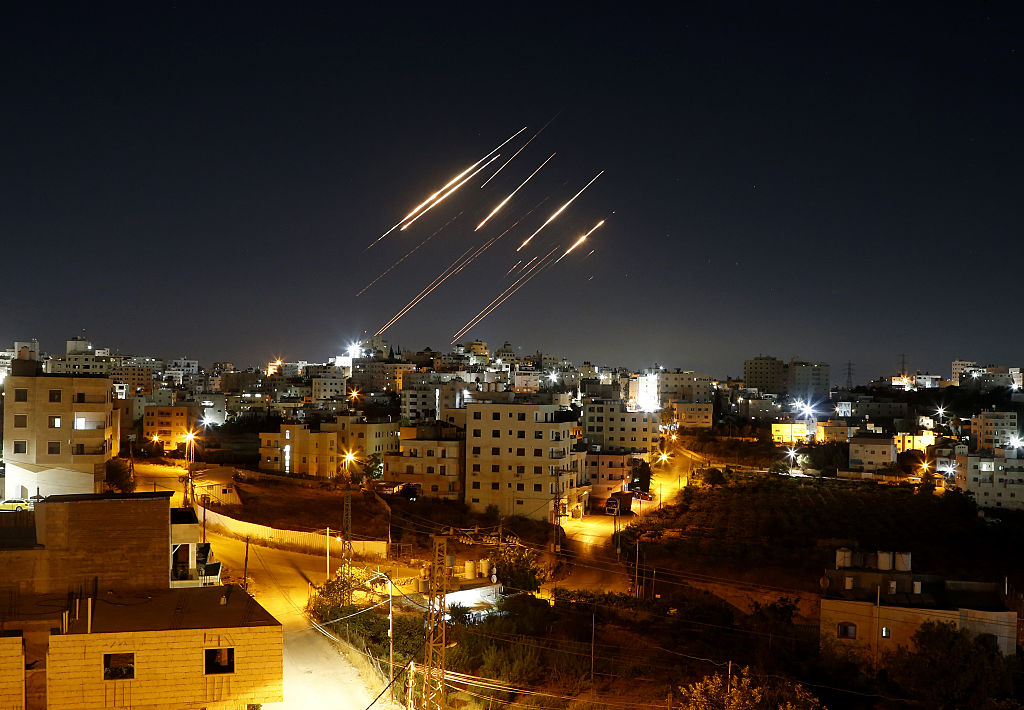
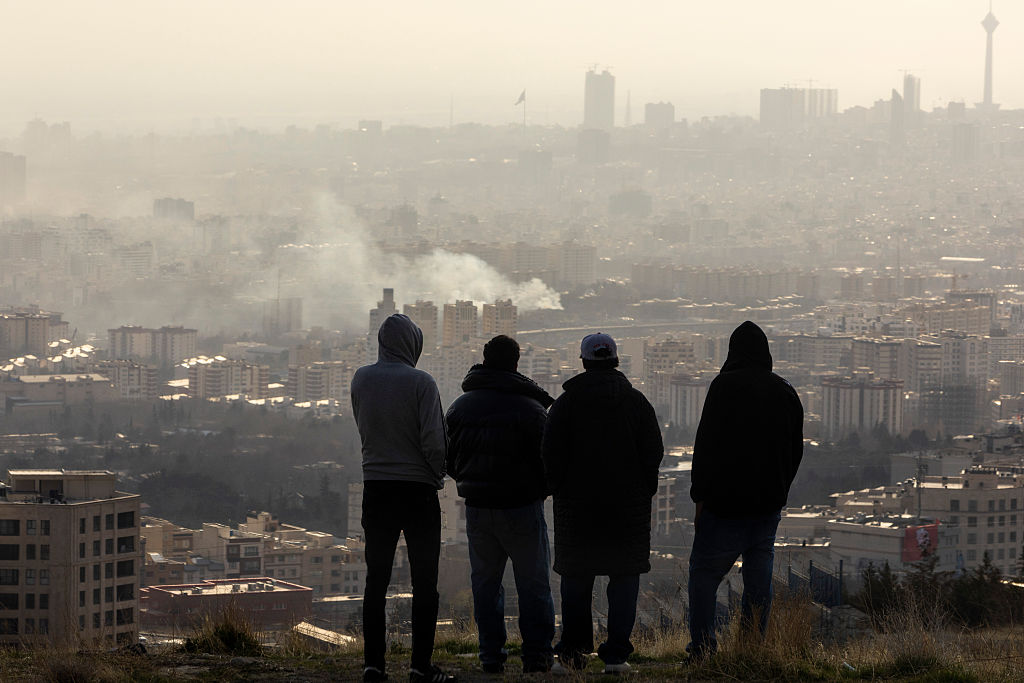
For decades, Washington has sought to punish Iran for rejecting its political order. This has once again become apparent in recent weeks, with carrier groups steaming toward the Persian Gulf, Israel’s Prime Minister Benjamin Netanyahu visiting the White House, and the president hinting at “very tough” measures should this phase of negotiations with Tehran falter. Once more, Lindsey Graham (R-SC) cries wolf, belting out warnings of terrorism and weapons of mass destruction. All the while, ordinary Americans can sense that their interests are being subordinated, their worries drowned out by the steady beat of Netanyahu’s war drum.
The pageantry is meant to show resolve and confidence in the American military, but reveals American anxiety. The looming prospect of a war with Iran, despite the bravado, demonstrates that the national security state has lost track of its own priorities. Across the Pacific, a patient observer watches optimistically. The Chinese Communist Party has learned that when America weakens itself, Beijing benefits.
Warhawks religiously assert that America’s decline is a result of “weakness.” War is merely diplomacy with bombs, after all. To them, there is a need to display force, to demonstrate America’s strength in a world that seems increasingly doubtful of this hegemony. Yet machismo without prudence devolves into political theater, and kabuki has its cost. A war with Iran would further entrench the permanent state of emergency that has existed since the beginning of the Global War on Terror. Said entrenchment necessarily requires a shift in military priorities, increased national debt, and deferred domestic concerns. The United States’ efforts to dominate the Persian Gulf would consume billions in capital and labor that would otherwise be invested in domestic industry and infrastructure, priorities the administration itself claims to value.
China, by contrast, would not need to respond symmetrically, if at all. As in Iraq, Afghanistan, Libya, Syria, and elsewhere, it will simply keep building. Resources devoted to war cannot be devoted to production. While Washington redirects capital into missiles and troop deployments, Beijing invests in ports, industrial production, and supply chains. This imbalance compounds. Over time, the nation that favors pragmatic peace over continuous conflict does not merely save capital, but also magnifies stability. The advantage is subtle; no battlefield victory is required to shift the balance of power.
The advantage is not mysterious. Tools developed to destroy enemy capital also destroy the wealth used to produce them, but wars do not merely cost money. Conflicts direct scarce resources away from the civilian economy and into sectors that stagnate or decline. In a normal economy, value determines investments and wealth accumulates. War breaks this natural flow, replacing economic incentives with political urgency and gradually diminishing usable wealth. When the weapons themselves are used, the waste becomes directly apparent. A nation addicted to this repetition falls behind because it destroys its own capital while its rival continues to develop.
Historically, these transitions are not clearly evident while they are happening. At the turn of the century, Britain feared the rise of the German Empire. As a rising naval power, London believed that the Germans would surpass the empire militarily, yet Germany would not ultimately replace her. Britain exhausted itself policing the world to maintain its prestige long after the price of empire exceeded the benefits. Meanwhile, the United States silently grew its industry and financial capacity, gradually usurping the role Britain fought so desperately to preserve.
The Soviet Union learned this lesson in the mountains of Afghanistan. A limited intervention justified by a need to preserve regional supremacy became a bottomless pit. The United States already encountered a parallel in Vietnam. Sold as a temporary conflict, the war strained the domestic economy, heightening political tensions, triggered mass riots, and provided the justification for expanded emergency powers. Overextension reveals weakness more effectively than retreat. In an effort to preserve their reputation, empires exhaust themselves, eventually exposing their economic and social limitations. Iran presents a similar temptation, a conflict being presented as limited but which cannot remain so.
Washington now risks repeating history. A war with Iran would not be an isolated strike. Such an engagement would inevitably devolve into a standing commitment, as it has already since 1979. Further military action continues to escalate the situation, justified by the fear of withdrawal and the collapse that would bring. The stated objective is stability, yet intervention will increase regional tensions. As has already been the case in the War on Terror, each additional deployment will promise closure while expanding the conflict. In the end, the effort to contain Iran would likely cause many of the problems in the Middle East that America claims to fear, paving the way for an Iranian nuclear weapons program or a genuine Iranian terrorist state following the forced collapse of the regime. Syria in particular seems to be the model.
China’s behavior in the Middle East reveals a different arithmetic. Beijing does not seek to dominate the Gulf; it positions itself as a mediator when possible and a hedge when necessary. By brokering the Saudi–Iranian rapprochement and restoring diplomatic ties after years of hostility, the CCP demonstrated that regional peace can be achieved through patience and economic leverage. Washington treats conflict like squashing a bug, something to fix by quickly using violent force, while Beijing sees it as a storm to navigate. The result is influence acquired without occupation, a key advantage in modern foreign relations.
Once entangled in the empire’s security web, the client’s reliance becomes pressure reinforcing the protector’s obligations. America’s temporary beneficiaries are not spared either. While Netanyahu lobbies Trump for another conflict, he places Israel in an increasingly precarious position. A regional order maintained by violent intervention is, at best, a lid on bubbling political tensions. Each escalation undertaken in the name of Israel's national security increases the nation’s dependence on an America that is already overextended and increasingly uninterested. In doing so, Tel Aviv hardens its neighbors’ hearts, convincing the Arabs that there is no route to peace without coercion. They respond in kind, rearming and waiting for the moment Washington’s ire turns toward them or is diverted elsewhere. Security maintained externally must, therefore, be guaranteed perpetually.
China does not need to defeat the United States to benefit from these decisions. It only needs Washington to keep making the same mistakes. Every military obligation drains attention and resources from the population that sustains it. The rival that avoids these entanglements accumulates advantages in silence while the opponent bombastically loses theirs. In the process, China turns American overreach into its own progress.
Subscribe Today
Get daily emails in your inbox
Don’t mistake this for an argument that the Pentagon should merely shift priorities. A pivot from the Middle East to a Cold War with China would repeat the same cycle in a new theater. The last Cold War already demonstrated this precedent. The Red Menace justified domestic surveillance, the birth of the national security state, and the rise of modern inflation cycles. Many of its architects openly accepted this gamble, condoning a “totalitarian bureaucracy within our shores” as long as the enemy was thwarted. A new rivalry in Asia would demand the same sacrifice, essentially acting as a substitute for a war with Iran. Principle requires returning to a uniquely American position, prioritizing our shores while shunning foreign crusades.
The Founders did not fear foreign entanglements because they thought enemies would invade from across the sea. Rather, they understood how domestic institutions transform in times of war. Whatever despot runs Beijing cannot erase the American way of life, but Washington can in a state of emergency. The apparatus developed to defeat the enemy would leave us living as though Beijing had already prevailed. Instead, victory requires choosing a republic over an empire and admitting we cannot rule the world. We must deny coercive regime change wars that bring tyranny to our shores. The strategy of the century lies in preserving the basis of real power, through industrial capacity and fiscal stability.
We are blessed to live in a world where no rival has ever defeated the United States. Yet, Washington repeatedly defeats itself, humiliating its own populace as others reap the benefits. Sun Tzu wrote in the 5th century B.C. “The supreme art of war is to subdue the enemy without fighting.” Nearly 3000 years later, the Chinese remember the wisdom of their forefathers. All the while, America’s elites forget their own, subduing the nation in the process.