The Necessity of Inequality
A new feminist manifesto makes the case for dependence.

The Dignity of Dependence by Leah Libresco Sargeant. University of Notre Dame Press, 232 pages.
The world is the wrong shape for women, or at least for women attempting to become men. This is the argument Leah Sargeant makes in her new book, The Dignity of Dependence, a “feminist manifesto” in which she suggests the best way to secure dignity for women is by destroying the illusions of autonomy and egalitarianism. “Recognizing and honoring the differences between men and women means putting dependence at the heart of our account of what it means to be human,” she writes.
Before 2020, it was common to hear feminists call the working world ill-fit for women. Many used the “male-centric” aspersion to gain accommodations in the military, contact sports, and other demanding jobs, to help women more closely approximate male capabilities. Transgender discourse made everything tricky, however, since saying female basketball players should have different standards than male ones is dangerously close to saying there is something biologically essential separating the sexes.
The male-shaped world is not just inconvenient for women who would attempt to fit in by becoming male; it’s deadly. Sargeant uses the example of a car crash, in which life and death are separated by mere inches. Crash test dummies, modeled on the average male body, are used to improve safety features for the average male. Yet, due to the size disparity between the average male body and the average female body, Sargeant reports, certain improvements for men make cars less safe for women. Similar dangers result when female surgeons use endoscopes designed to fit comfortably in the average male hand. The tool is too big for women to use well, even though, when one study downscaled endoscopes to fit the female hand, women became significantly more dexterous.
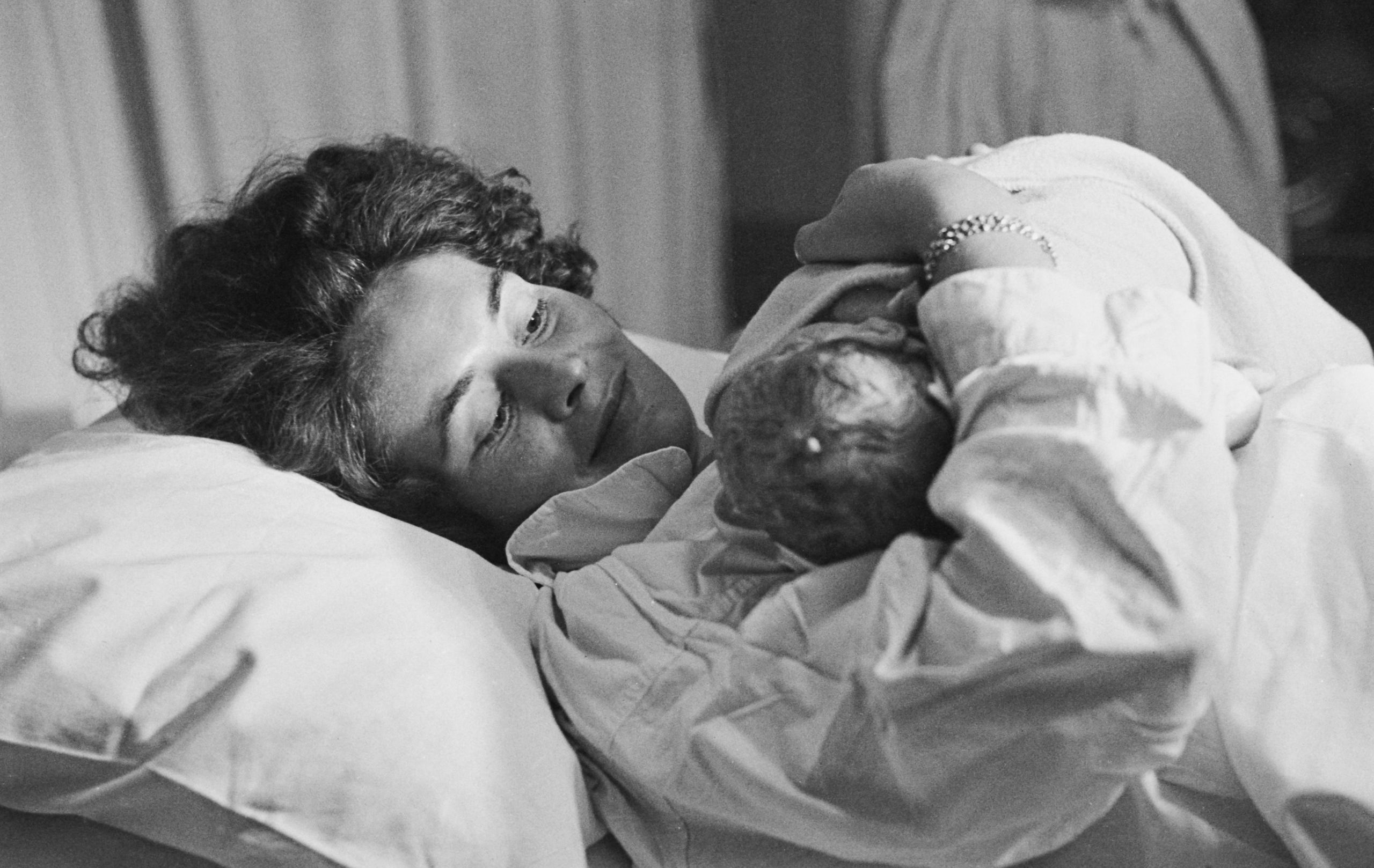
Yet Sargeant isn’t interested in eliminating sexed differences, nor does she imagine technology is up for the task. The most obvious difference between men and women, childbearing, is least eliminable. Despite advances in reproductive technology (Sargeant doesn’t put much stock in artificial wombs), children are still utterly dependent on mothers. The bigger point, however, is that “children pierce illusions of autonomy.”
“The longer I go without the strings connecting me to others flexing and pulling, the easier it is to imagine they don’t exist,” she writes. “The longer the break, the more tempting it can be to resent them as intrusive when they return to my attention. For a parent, the knowledge of being needed, of not belonging to oneself, can never fade for long.” What Sargeant is getting at here is not simply that parents are never entirely independent, a fact that precludes them categorically from the Rousseauean ideal of freedom-as-limitlessness that has defined most of historical feminism. She is also keen to convince the reader that such a state of dependence is both normal and good.
Historically, feminism has sought to overcome women’s crucial place in childrearing by democratizing as much of home life as possible, whether through hired or subsidized nannies, attempts to split childcare 50/50 between men and women, or a short-lived pitch to convince husbands pay their stay-at-home wives a salary. This is supposed to “help women to achieve men’s lightness,” under the assumption that “women are unfairly burdened and cannot be equal in society or before the law” until they are relieved of their role in the creation and preservation of the next generation. Such attempts are problematic for Sargeant, not because women don’t need help raising their children, but because they do. To imagine children as independent from their mothers is to allow the market price for care work to determine the moral value of mothers, ultimately treating mothering as a low-skill job. This degrades women in two ways, both by relegating the job to “lesser” women and by forcing mothers who can command a higher wage return to work sooner after birth, pump bottles in public restrooms, and engage in frankly humiliating coping strategies as they mourn this separation, such as changing their work passwords to affirmations that “(baby’s name) loves me,” Sargeant quotes.
A reality-based culture, meanwhile, recognizes pregnancy not as “an aberrational time, an interruption of autonomy,” but as “the foundational human experience.” Women need time, space, and protection while they bear, birth, and brood over their children, Sargeant says. In other words, they need to be allowed to be dependent, too. This requires reliable husbands with reliable jobs, not to mention communities built on trust and sharing (a “gift economy”). As any woman who has given birth knows, her self-offering to the child is only possible through the self-offering of several others who support her. The child’s dependence represents the first of many concentric circles of need.
The words of playwright Sarah Ruhl are poignant for Sargeant as she recounts the hard, priceless work of labor and delivery, and motherhood in general: “Annihilate me; that other self was a fiction anyhow,” she quotes. Dependence, for Sargeant, seems to require a level of reshaping for women, who have been trying to fit themselves to the male world for a while now: “The world I had come to feel at home in often turns out to be passing away. I need to be ready to explore and accept the deeper reality my circumstances and crosses reveal.”
The indignities of forcing oneself into the male world as a mother are contrasted with the dignities, and even the beauties, of being depended on. “When we give up the illusion of simulated sameness and stability, we are vulnerable to need but also, at last, open to growth,” she writes. Here, Sargeant is at her best. Simone de Beauvoir called housework “the torture of Sisyphus,” because the housewife “makes nothing, simply perpetuates the present.” The problem with such “contempt for the work itself,” Sargeant quips, is that it carries over to the woman’s relationship with the “drudges and drones” she hires to do it for her—to say nothing of her own children, one might add, those “nothings” which she labors so lovingly for. Turning to G.K. Chesterton, Sargeant highlights the “[romance] of maintenance,” of “keeping something still in a swirling storm of entropy.”
Entropy resistance is a lot more glorious when done in community, as women’s work was historically. “The shared witness of daily work…could lend the work a dignity that couldn’t be fully communicated by monetary compensation,” Sargeant writes. It turns out there is much to be respected in homemaking, for those close enough to notice: Women sharing chores may also share tips, or “observe and praise a particular excellence.”
Perhaps hardest in all this pursuit of dependence is our own ingrained habit of equality. Sargeant points to the economist David Graeber’s Debt: The First 5000 Years, which contrasts the roles of debt in low-trust and high-trust economies. “Exchange implies equality, but it also implies separation,” Graeber writes. Or, as Sargeant puts it, “treating friends with the same ‘fairness’ you’d apply to strangers can be profoundly alienating.” After reading Graeber’s book, Sargeant decides to introduce this concept to her own friendships, taking turns paying for the whole dinner, rather than splitting the bill dollar for dollar, to increase intimacy precisely by slightly increasing inequality. If human relationships require inequality, which seems to be the only conclusion from this episode, the reader may wonder what role, in any, feminism warrants in a reality-based culture.
Sargeant does not answer that question. She does insist, however, that dependence is as good for men as women. Men need to be needed, not merely as another set of hands to help mothers, but as fathers, with all the responsibilities that title endows. As one example of this, Sargeant describes how her husband, Alexi, convinced her to take his last name. Her own parents gave her her mother’s last name “as a feminist choice.” She says she “objected to the assumption that [the shared family name] was expected to be the man’s,” until Alexi told her to read an essay by Leon and Amy Kass, called “What’s Your Name?”
She describes it:
Subscribe Today
Get daily emails in your inbox
The Kasses argue that by extending his name and thus his self over his wife and child, a father is not taking possession of his family but committing to risk himself for them. A woman envelops her in utero child with her flesh and blood, but a father has a more abstracted way of extending himself over the persons he loves and interposing himself between them and the rough chance of the world. The mother’s gift begins in privacy (perhaps even unknown to her) when the baby is conceived. Her husband’s complimentary gift is by necessity public.
The husband’s gift of his name is a gift of protection and responsibility. To receive this gift, and embrace dependence, is also to provide one, by allowing men to step into a role of real risk, and therefore meaningful worth.
Sargeant still calls herself a feminist. It is unclear in what sense. Her case is a powerful and beautiful argument for dependence, and a culture which takes women and men not as separate equals, but as marrow and bone.