
God, Hitch, & Sully
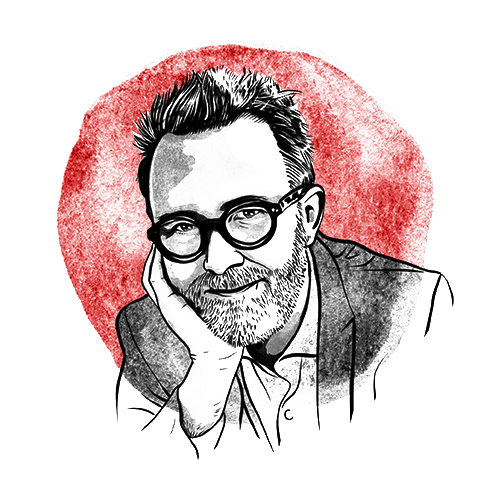
Andrew Sullivan transcribes a recording of a late-night conversation he had with his pal Christopher Hitchens a few years ago, as part of an aborted podcast project. They talked about God. Start here, then follow up here. Excerpts:
A: I think that what [Oakeshott] would say, and what I would say, is that what’s sinister is the deployment of dogma as certainty. If one takes Lessing and Oakeshott’s view of Christianity, which is ultimately that God is unknowable—
H: Then don’t pretend to know.
A: Then we cannot know. Or, what we can know, we will hold with a certain humility and provisionality. I mean, one can know, for example, that the Gospels exist and that they represented a human being whose life can be either honored or dishonored.
H: But the further implication of this is that if you admit or concede or even claim that it’s unknowable, then the first group to be eliminated from the argument are those who claim to know.
A: Yes.
H: Because they must be wrong.
A: Yes.
H: Well, that lets off quite a lot of people at the first floor of the argument, long before the elevator has started moving upwards, or downwards. Those who say they know, and can say they know it well enough, what God wants you to eat or whom he wants you to sleep with — they must be wrong.
A: That is proof itself that they are wrong.
H: Yes. As well as being impossibly arrogant, coming in the disguise of modesty, humility, simplicity. “Ah, I’m just a humble person doing God’s work.” No, excuse me, you must be either humble or doing God’s work. You can’t know what God’s work would be, don’t try your modesty on me. And once one’s made that elimination, then everything else becomes more or less simple. My problem only begins there.
A: But it’s still a religion.
H: Or maybe a faith or a cult.
A: Yeah, faith.
H: But my problem begins only when that’s out of the argument and we agree that’s nonsense.
A: That is nonsense.
A friend and fellow Sully reader e-mails:
I don’t know if I’ve ever seen Andrew go so far in the direction of saying that religion is primarily about uncertainty. I find that utterly incoherent. I have respect for someone who truly tries to live a life of doubt, like Socrates, but that will never be a religious life. Which isn’t to say that doubt can’t or shouldn’t be a big part of a life of faith. But when push comes to shove, faith/religion has to be about affirming something to be true. And Andrew does that! Even if you disagree with his account of Christ’s life and divinity in, say, his Newsweek cover story last Easter, it’s clearly filled with a series of propositions about the essence of God, what he wants from us, etc. That’s not uncertainty or doubt. You can add uncertainty and doubt to it. But the propositions themselves are the foundation to which uncertainty and doubt is added, not the other way around. Someone who truly lives a life of doubt would have nothing positive to say about God or Christ.
This is obvious, right?
Yes, it’s obvious to me, and it’s why I find trying to find solid ground on which to engage with Andrew’s religious opinions like shadowboxing. Notice the bit from his discussion with Hitchens, in which he says that anyone who claims they know what God wants us to do with regard, say, to what we should eat or with whom we should sleep, are not only wrong, but the claim of certainty is itself proof of their wrongness.
That really is incoherent. If that is true, then how does Andrew know that God approves of homosexuality, or opposes torture, or slavery, or whatever?
To be sure, I don’t know of any Christian who is serious about his or her faith who doesn’t also doubt some aspects of it. In the Orthodox Christian tradition, the entire theological approach is based on what is called “negative theology” — the idea that God, as an infinite being, is essentially unknowable by the intellect (but “knowable” in the sense that it is possible for two persons to know each other), and that we can better understand who God is by talking about who, or what, God is not. The Orthodox Christian is careful about making definitive statements about God, because He is so wholly transcendent. But that is absolutely not the kind of doubt Andrew extols.
As longtime readers know, I’ve gone through my own crisis of doubt, and it resulted in me losing my ability to believe in Roman Catholic Christianity. This experience shook me up a very great deal, and caused me to think about the firmness with which I held on to religious dogma. It did not make me doubt that the Truth exists, and it is, to a certain extent, knowable. It caused me, rather, to mistrust my own fallible perceptions of the Truth, and to try to think more carefully about them, trusting in St. Paul’s admonition that in this life, we see through a glass darkly. What’s more, I realized that for Christians, the Truth is not merely propositional, but incarnational; what does it mean to live in Truth when you believe that the Truth has been and is incarnated in a living person?
Yet even if we cannot know the entire truth (Truth) clearly in this life, that does not mean that it’s all a free for all. Andrew doesn’t even believe that. Here’s what he wrote in that Newsweek piece:
And yet, there can be wisdom in the acceptance of mystery. I’ve pondered the Incarnation my whole life. I’ve read theology and history. I think I grasp what it means to be both God and human—but I don’t think my understanding is any richer than my Irish grandmother’s. Barely literate, she would lose herself in the rosary at mass. In her simplicity, beneath her veil in front of a cascade of flickering candles, she seemed to know God more deeply than I, with all my education and privilege, ever will.
This doesn’t imply, as some claim, the privatization of faith, or its relegation to a subordinate sphere. There are times when great injustices—slavery, imperialism, totalitarianism, segregation—require spiritual mobilization and public witness.
Around what principles, though? How do we know that these things are wrong? If, as Andrew told Hitch, the assertion of dogmatic certainty is proof that one is wrong, then on what solid ground does Andrew or any other Christian stand? This is what the great sociologist Philip Rieff, a non-believer, called an “anti-culture.” All cultures define themselves by what they are not, and by what they do not believe. Andrew takes a laudable trait — epistemic humility — to an unsupportable conclusion, and in so doing makes it impossible to affirm anything confidently. I do not question the sincerity of Andrew Sullivan’s heart, but I really can’t make sense of his theological reasoning here, especially given that on issues he cares the most about, he is as dogmatic and as confident as any 19th-century pope. I am reminded of Rieff’s observation that:
Western culture is changing already into a symbol system unprecedented in its plasticity and absorptive capacity. Nothing much can oppose it really, and it welcomes all contradiction, for, in a sense, it stands for nothing.
If we propose a Christianity in which things we don’t wish to hear are shrouded from our view by doubt, and the things we do wish to believe receive the imprimatur of certainty, then we will almost certainly end not by worshiping the God of Abraham, Isaac, and Jacob, and the God of Peter, Paul, and the Virgin Mary, but rather the God of Me, Myself, and I.
For a deeper consideration of Rieff’s take on our contemporary problem — the need for limits set by authority, but the difficulty of accepting limits — see this passage from a George Scialabba essay on Rieff, below the jump:
But the worst thing about psychological man was his children. Raised without repressions, they were incapable of renunciation and regarded all authority as illegitimate. Rieff’s second book, The Triumph of the Therapeutic (1966), raised the alarm about their “devastating illusions of individuality and freedom.” A society without hierarchy, whose members “cannot conceive any salvation other than amplitude in living itself,” must end in moral squalor, chaos, anomie, and universal boredom. Nor will it help to “disguise their rancorous worship of self in the religion of art,” for art too depends on renunciation. Here Rieff quotes Nietzsche at length (in what is for me the most illuminating passage in Rieff’s entire corpus):
Every system of morals is a sort of tyranny against “nature” and also against “reason”; that is, however, no objection, unless one should again decree, by some system of morals, that all kinds of tyranny and unreasonableness are unlawful. What is essential and invaluable in every system of morals is that it is a long constraint. … The singular fact remains … that everything of the nature of freedom, elegance, boldness, dance, and masterly certainty, which exists or has existed, whether it be in thought itself or in administration, or in speaking and persuading, in art just as in conduct, has only developed by means of the tyranny of such arbitrary law; and in all seriousness, it is not at all improbable that precisely this is “nature” and “natural” and not laisser-aller! … The essential thing “in heaven and earth” is apparently (to repeat it once more) that there should be long obedience in the same direction; there thereby results, and has always resulted in the long run, something which has made life worth living.
Muscular strength is built gradually, for example by overcoming the resistance of progressively heavier weights. Moral and psychological strength also require resistance—the pressure of cultural interdicts, dictating what is not to be done or even thought of. Such discipline simplifies our lives and economizes our energies. Without an unquestioned moral demand system, based on guilt, fear, and faith and generating obedience, trust, and dependence, there can be no spiritual hygiene, no communal purpose. And that is what the triumph of the therapeutic ethos makes impossible. Nowadays “the religious psychologies of release and the social technologies of affluence do not go beyond release and affluence to a fresh imposition of restrictive demands. This describes, in a sentence, the cultural revolution of our time. The old culture of denial has become irrelevant to a world of infinite abundance and reality.” In the absence of strict, even harsh, limits (to use a plain word Rieff himself, puzzlingly, so seldom used that one is led to wonder whether his elaborately artificial prose style was itself meant as a discipline), we cannot thrive.


Subscribe for as little as $5/mo to start commenting on Rod’s blog.