
Washington Post columnist David Ignatius has an interesting column entitled “Framework to end the Afghan war.” Ignatius is usually well wired into the White House, not to mention the intelligence community and Pentagon. His column describes how talks are underway to “narrow each side’s demands” to “irreducible essentials” so that a graceful withdrawal of NATO forces and a transition to a new government might take place. Per Ignatius, everyone now agrees that a military solution to Afghanistan is not achievable. He reduces the two sides’ demands to: Washington insists on no al-Qaeda presence in Afghanistan and equal rights for women, while the Taliban insist only on complete removal of all foreign troops.
Though I believe that U.S. interests would have been best served by leaving Afghanistan in 2002 and I would support the Clint Eastwood formula that they should leave tomorrow, the settlement being negotiated sounds an awful lot like surrender, uncomfortably reminiscent of the Paris Peace Talks that ended the Vietnam war and led to the communist takeover of the entire country.
The Taliban have publicly defended peace talks as a “way to reach our goals,” which should sound ominous but apparently does not suggest anything to Ignatius. They also have reportedly agreed to “give all legitimate rights to women in the light of the Islamic principles, national interests and our noble culture.” As most would concede that the role of women in Afghanistan is largely cultural, it would not appear that women’s rights will be a priority under a new regime. And as al-Qaeda is in Pakistan rather than in Afghanistan, the prohibition on the terrorist group’s reemergence has little meaning apart from saving face over the casus belli for invading the country in the first place.
Does anyone seriously believe that the U.S. will re-invade Afghanistan if women are mistreated? If not, then any concession in that area is essentially unenforceable. And what about Hamid Karzai, the Emperor of Kabul? He is not likely to last for long after the U.S. troops pull out. Which pretty much returns us to the status quo ante of 2001, except for 2,000 dead American soldiers, at least 30,000 dead Afghans, and several hundred billion dollars wasted.
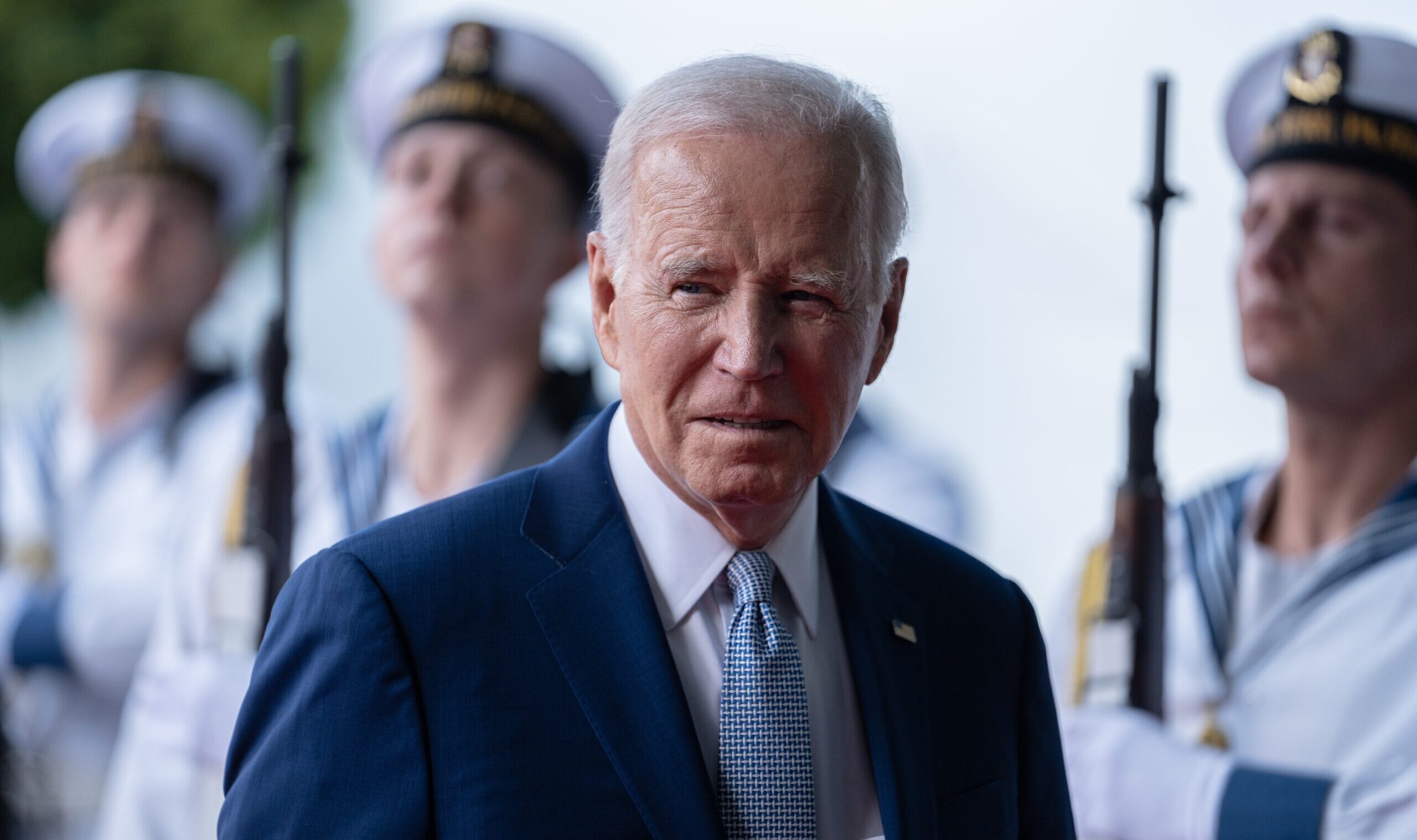

“Though I believe that U.S. interests would have been best served by leaving Afghanistan in 2002 and I would support the Clint Eastwood formula that they should leave tomorrow”
PG, in one of my first postings on TAC back on April 7, 2010, I made the following remarks (which basically repeat what I was saying on Yahoo Finance Message boards back in 2003, when I first started posting anywhere):
“You raise a very good point, although it is not clear whether you are referring to Iraq or Afghanistan. There are two important aspects to getting involved in any war. One, should you go to war in the first place, and, two, is there “a plausible exit strategy to avoid endless entanglement.” http://en.wikipedia.org/wiki/Powell_Doctrine Most of the talk here and elsewhere has focused on the first point and neglected the second.
The two situations differ. We had a justification for going to war with Afghanistan because of its connection to 9/11 and its harboring of Al Queda. Despite all the criticism directed his way, Donald Rumsfeld actually fashioned a light footprint that succeeded in overthrowing the Taliban. Victory was secured at very low cost and little loss of American life. The mistake in Afghanistan was that we did not simply declare victory and pull our troops out. We had and still have no vital national security interests in Afghanistan that justified our prolonged presence, and the notion that we could transform that backward culture into some semblance of a modern state was pure fantasy from the start. We are now fighting on one side of what is essentially a civil war and still haven’t fashioned a suitable exit strategy. Maybe we should follow Karzai’s suggestion and join forces with the Taliban.
Iraq is different in that we had no justification in going to war against Saddam Hussein in the first place since he had no connection to 9/11 and no ties to Al Queda. Still, we were able to overthrow Saddam’s regime with a comparatively small force and minimal loss of American life. The problem is that our small force was based on our quickly exiting Iraq. Continued effective occupation would have required the much larger force advocated by Gen. Shinsecki. Of course, completely disbanding the Iraqi army was a colossal blunder that prevented our effectuating a quick departure.
But, in both instances, it was the initial failure to design a plausible exit strategy that turned bad situations into disasters, as you pointed out.” http://www.theamericanconservative.com/larison/by-its-own-standards-the-surge-failed/comment-page-1/#comment-240080
There appears to be no daylight between your position and my long-held position on Afghanistan. BTW the credit I erroneously gave to Donald Rumsfeld back in 2010 should have more properly been extended to the CIA. I should have realized that the Defense Department was not capable of imagining routing the Taliban and Al Qaeda on such an old fashioned concept as horseback.